$29.98. That's what the third 4-foot LED shop light cost at Home Depot last week, five dollars more than the two I bought in 2023, and it's already hanging on chains over the third tier of the seed shelf with a tray of sweet peas under it. The question I've been chewing on since last April is how much a third light would add to the electric bill.
Why the shelf needed more light
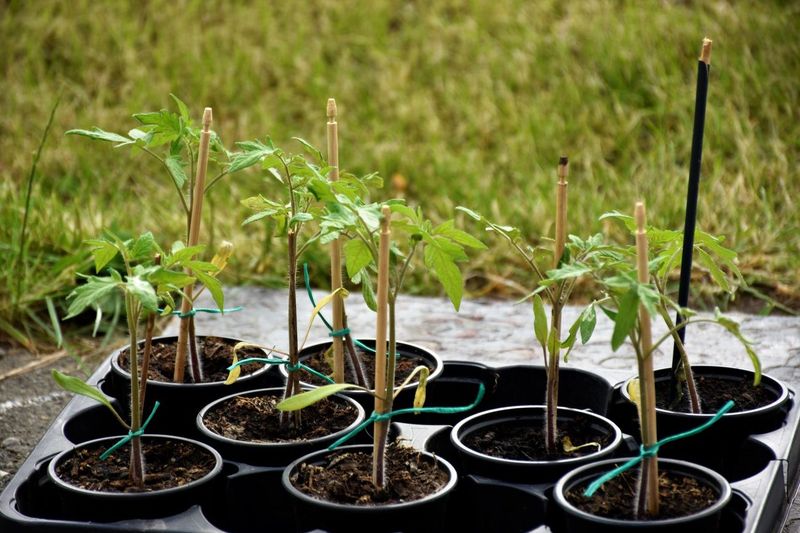
Last spring the shelf ran out of light right when it mattered. The onions were fine in February and the peppers fit in March, but over spring break in April I potted up 40 tomato seedlings into yogurt cups and milk cartons, and suddenly I had twice as many containers as lit shelf space. Some trays sat a tier below the lights, living on leftover glow. Those seedlings stretched, went pale and flopped. I gave the good ones to coworkers and kept the leggy ones, which probably says something about me.
Our shelf is a 4-tier, 48-inch wire unit. Two lights covered two tiers. A third light means a third full tier, and for the first time I won't be shuffling trays around like a shell game.
Shop lights versus grow panels
Before buying another shop light, I spent a couple of evenings looking at proper LED grow panels, the flat square ones covered in tiny diodes. They're impressive. They put out a lot more light per square foot, many of them dimmable, and the light is tuned for plants. The ones I looked at ran from about $90 to $160 each.
For seedlings, I couldn't talk myself into it. Our seedlings only live on the shelf for six to ten weeks before they go out, and shop lights hung 2 to 3 inches above the leaves have grown stocky tomatoes and peppers for us for three springs now. The tradeoff is that shop lights have to be close, which means adjusting the chains every few days as things grow. A panel could hang higher and be forgotten. But for the price of one panel I could buy three more shop lights, and I don't have the tiers for that.
If I were growing lettuce in the basement all winter, or trying to ripen peppers indoors, I'd think about it differently. I'm babysitting seedlings for about three months a year.
The electric bill math
Last year I put a plug-in meter on the whole setup, two lights plus the heat mat, and it came to about $12 a month from February to May at our all-in rate of about 27 cents per kilowatt-hour. Nate, who estimates electrical jobs for a living, checked my math and only corrected one decimal.
The new light is rated a little under 40 watts, a few more than the old pair measured. On a timer at 16 hours a day, that's about six-tenths of a kilowatt-hour a day, or roughly 18 kilowatt-hours a month. At 27 cents, a third light should add somewhere around $4.50 to $5 a month while it's running.
So the setup goes from about $12 a month to about $16, not $24. The heat mat doesn't change, and the two existing lights don't change. One more light adds about a third to the bill, not double. Over four months that's maybe $18 to $20 for the season, plus the $29.98 for the fixture, which comes out of the seed-starting line in our 2026 budget.
The thing that could still move the number is the heat mat. Right now it runs around the clock whenever it's plugged in, and I'm about to add a thermostat so it only heats when the soil is cool. That should trim a little off the bill and, more importantly, fix last year's slow, uneven pepper germination. More on that when the peppers are up.
What's on the shelf now
As of tonight, one tray of sweet peas, sown February 7, sits under the new light. They don't need bottom heat, and nothing is showing yet; sweet peas can take a week or two. Next Monday is the start of mid-winter recess, which is when the onion flats go in, along with the leek and the celery this year. The bottom tier holds the heat mat, waiting for peppers on March 1.
Mateo came down while I was hanging the light and said the basement looks like a spaceship now. In the dark, the three tubes throw a cold white glow up the stairwell and across the pipes, and Pim has been sitting on the bottom step all evening, staring into it.
Into the notebook: light number three, $29.98, hung February 8. I'll put the meter back on in April and see whether my estimate was honest.