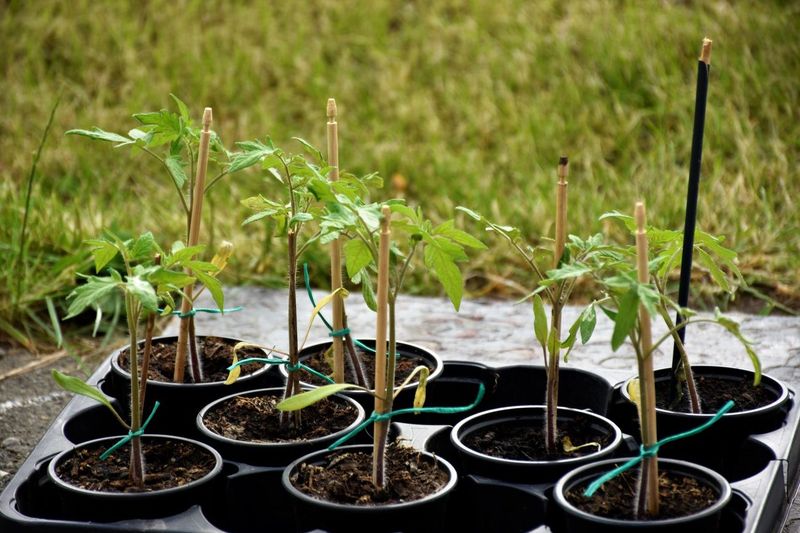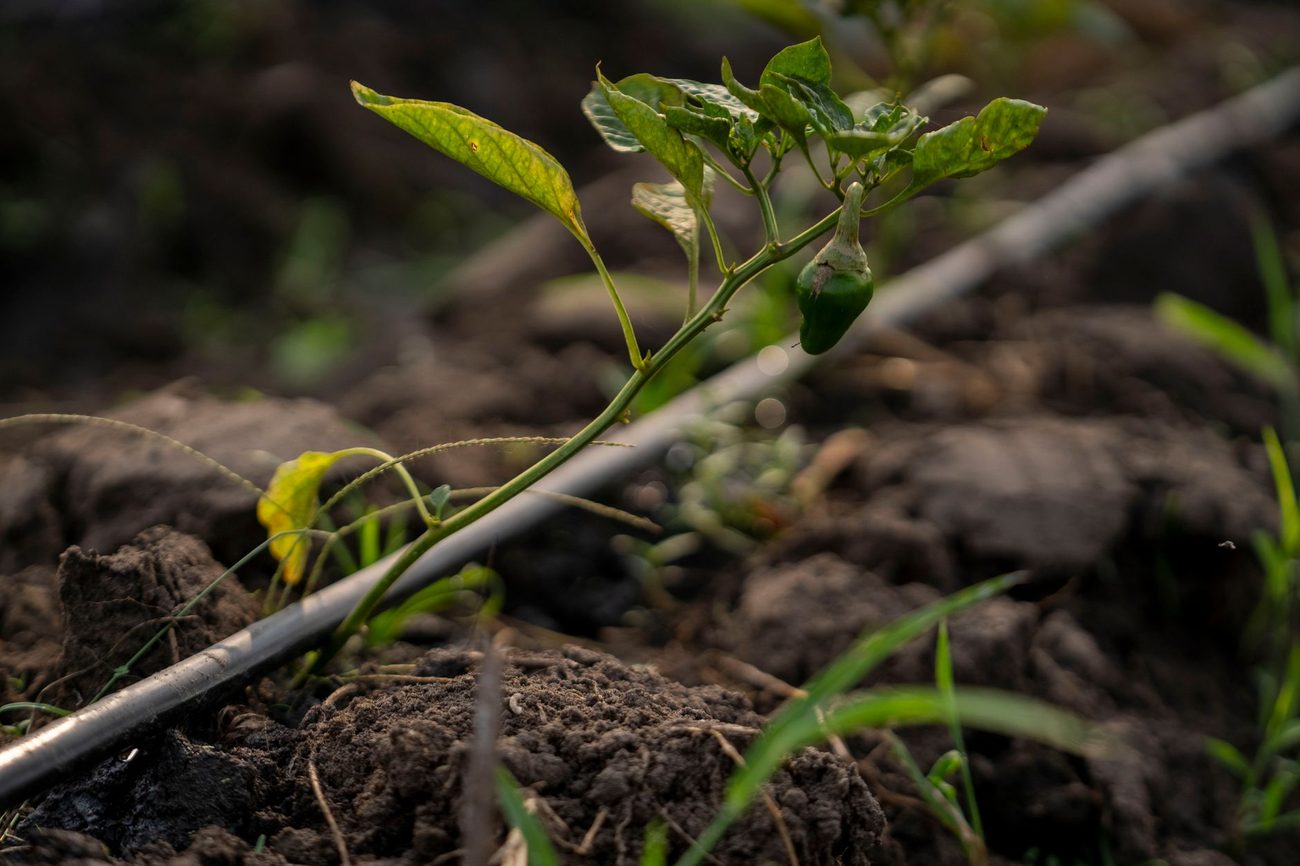
Nine days. That's how long it took this year's peppers to come up, from sowing on Sunday, March 1, to a tray full of little green loops on Tuesday morning, March 10. Last year the first pepper showed up after almost two weeks, and the last stragglers took close to a month. Some cells never came up at all. The difference, as far as I can tell, is an $18.99 thermostat and a probe the size of a pencil.
What went wrong last year
Peppers are the slow, picky ones on the seed shelf. They germinate best in warm soil, around 80 degrees, which is a lot warmer than our basement in March. So in 2023 I bought a $21.99 seedling heat mat, and for three springs I simply plugged it in and hoped.
The trouble is that a heat mat without a thermostat has no idea what the soil temperature is. It puts out a steady bit of warmth, and where the soil ends up depends on the room. On mild days the cells in the middle of the tray ran warm. On cold nights, when the basement dipped, the whole tray fell into the low 70s or below, and the edge cells were cooler still. Last year, after I sowed on March 8, I had peppers popping up in the middle of the tray while the edges sat there doing nothing. The ají dulce, which matters most to me, was the slowest of all.
Uneven germination is more than an annoyance. The early seedlings need the dome off and strong light, while the late ones still want the dome on and warmth. I spent most of last March trying to serve both, and the early ones got leggy while I waited for the rest.
How the thermostat works, and how I set it up wrong
It's a small box that plugs into the wall, and the heat mat plugs into it. A thin wire with a probe on the end runs from the box into the soil. You set a temperature, and the box switches the mat on when the soil is cooler than that and off when it gets there. Same idea as the thermostat on the wall, just for a tray of dirt.
I set mine to 80 degrees. Then I made my first mistake. I laid the probe flat on top of the mat, under the tray, because it looked tidy. The mat warmed up, the probe read 80 almost immediately, and the thermostat shut the mat off while the soil above was still in the 60s. I caught it the next morning with an instant-read thermometer pushed into a cell. Now the probe sits about an inch deep in the mix, in a cell in the middle of the tray, where the seeds actually are. After that, my thermometer read between 78 and 81 every time I checked, morning and night.
What's sprouting
This year the peppers are going into nine fabric pots on the porch instead of the west bed, so I sowed enough to pick the best nine plants and have a few to give away:
- Ají dulce from my own saved seed, 12 cells
- Jalapeño, 6 cells
- Shishito, 6 cells
- 'Carmen' sweet pepper, 6 cells
As of this morning I count 27 of 30 cells up. The ají dulce came in at 11 of 12, the best germination I've ever had from that seed. My mother asked about them on sofrito day, so I texted her a photo of the tray. She replied with one word: "Finally."
Once most of a tray is up, the dome comes off, the tray moves under the lights, and I turn the thermostat down to about 75 so the roots stay comfortable without pushing the seedlings to stretch. The tomato seeds go in on March 22, and they'll get the mat next.
There's a side benefit I didn't expect. The mat isn't on all the time anymore. Before, it ran 24 hours a day from the minute I plugged it in, and now it cycles. I haven't put the plug-in meter on it yet, but it should shave a little off the electric bill I wrote about in February and help cover the third light.
The thermostat and the third light together came to $49 out of this year's garden budget, inside the $50 I set aside for seed-starting gear in January. Of everything I've bought for the seed shelf since 2023, this might be the best $19.
Most of the seedlings are still holding their two first leaves pressed together, pale green and shiny, like hands that haven't decided whether to clap. Into the notebook: sown March 1, up March 10, 80 degrees, probe in the soil, not under it.