"How many tomatoes are we growing this year?" Nate asked from the bottom of the basement stairs on Monday morning. Ten, I said. Six in the west bed and four in buckets on the porch. He looked at the shelf, counted under his breath, and went back upstairs without a word, which is how he says a lot of things.
There are thirty tomato seedlings in our basement.
Why thirty for a ten-plant garden
I sowed them on March 22: eight varieties, three or four seeds of each, with a couple of extra San Marzanos and Sungolds because I want two of each in the garden. The bed gets Cherokee Purple, San Marzano, Amish Paste, Early Girl and Sungold. The buckets get Sungold, Juliet, Matt's Wild Cherry and Supersweet 100.
All thirty came up, which almost never happens. But a seedling coming up is not the same as a seedling worth planting. Some stretch, some grow a crooked stem, some just sit there looking at you. Starting three for every spot lets me plant the strongest and keep a spare in case May does something rude, like a gust that snaps a stem on the porch. The rest go to coworkers. Last spring I started forty and gave away close to thirty, so thirty is me being reasonable. Nate disputes the word reasonable.
Potting up week
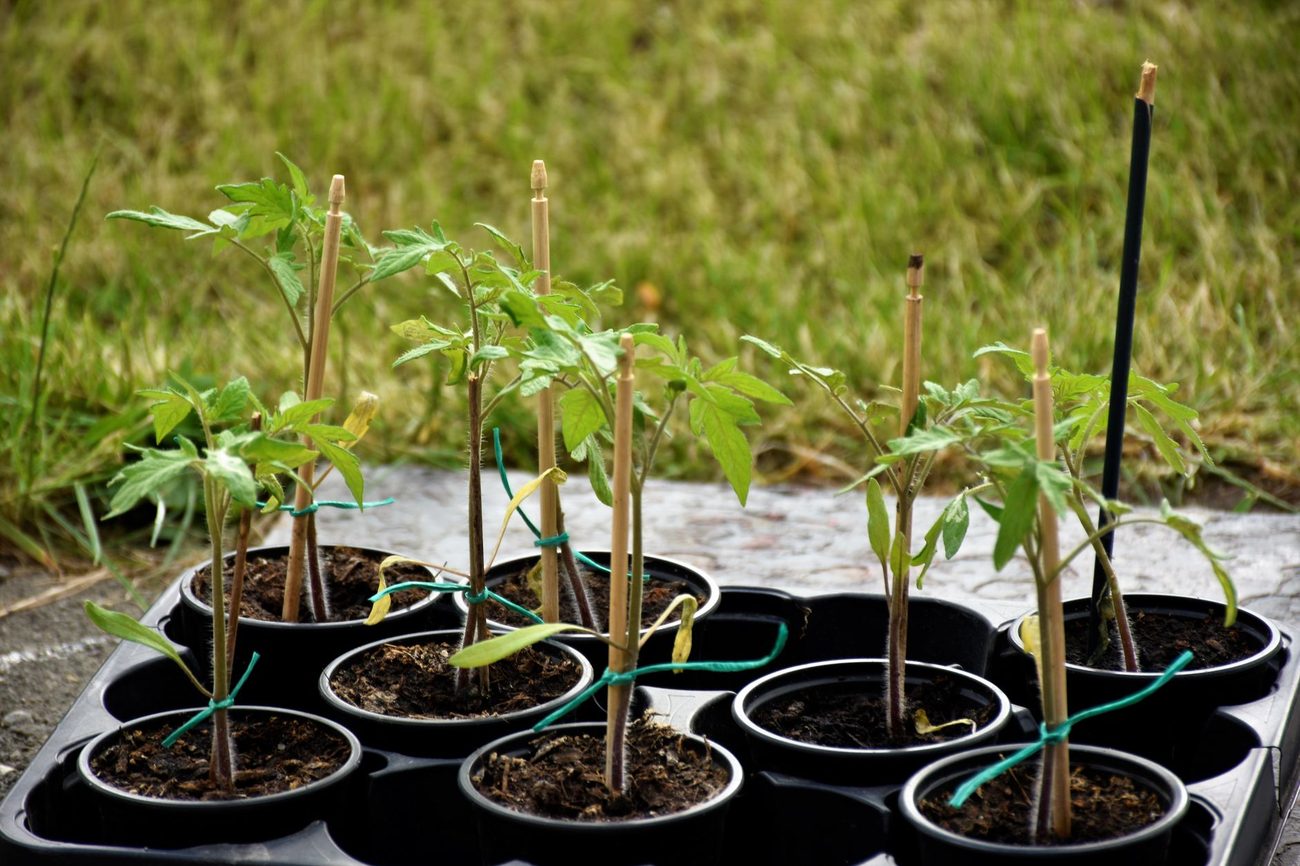
Spring break this year runs April 3 to 10, and like every year it's potting-up time. The seedlings had their first true leaves and were starting to shade each other out in the cell trays. All winter I'd been saving quart yogurt tubs and half-gallon milk cartons with the tops cut off, rinsed and stacked in the laundry room. I punched three drainage holes in the bottom of each with an awl, filled them with Pro-Mix and gave every seedling its own container.
Tomatoes are the one seedling I bury deep on purpose. I pinch off the seed leaves and set each plant so the mix comes up nearly to the first true leaves. The buried stem grows roots along its whole length, so a slightly leggy seedling ends up sturdier, with more roots to drink with. Then the whole batch gets watered from below in the old dish tubs until the top of the mix darkens.
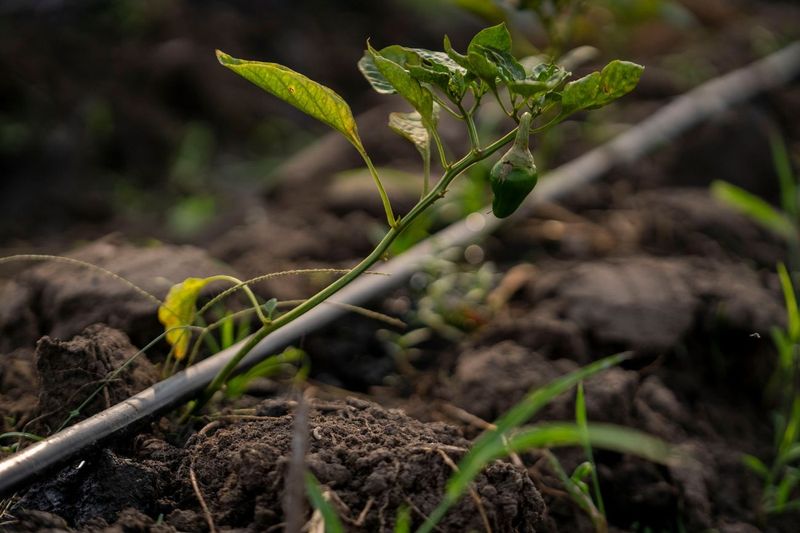
The peppers I sowed March 1 got the same move last week, minus the deep burying. Peppers don't root along their stems the way tomatoes do, so they go in at the same depth they grew.
The shelf-space puzzle
The seed shelf is a 4-tier, 48-inch wire unit, and this year three shop lights hang over three of the tiers. Before potting up, all thirty tomatoes fit in two small trays. Afterward they take up nearly three times the room, and that's before the peppers and the February onions, leeks and celery.
Here's how it shook out. Tomatoes have one lit tier and peppers have another. The onions, leeks and celery now spend their days on the back steps getting used to real weather, then come in at night to the unlit bottom shelf, which frees their tier for the pepper and tomato overflow. The third light, the one I added in February, is earning its keep this week. Running all three costs us about $16 a month, which I can live with for the few months they're on.
One honest note. Last spring I watered everything on the same day, and the milk cartons, which hold more mix than the yogurt tubs, stayed soggy for a week. This year the cartons get water about half as often, and I check them by lifting them rather than by looking at them. A wet carton is surprisingly heavy.
When the basement drops to 58 degrees at night, the undersides of the Cherokee Purple leaves go a dusky violet, the color of the shadows in a winter landscape. It's only the cold. They green up once they're outside for good.
Who gets the extras
I'm keeping twelve: ten for the garden, plus a spare San Marzano and a spare Sungold. The other eighteen go out after break. On Monday I'll tape a sign-up sheet to the copy machine in the teachers' lounge, same as last year, with each variety and a one-line description, because nobody signs up for "Amish Paste" until you tell them it makes a thick sauce. Joanne next door has already called dibs on a Cherokee Purple. The first daffodils are opening along the front walk, so I'll walk it over to her when the weather settles.
Pim sat at the top of the basement stairs most of the week like a small orange supervisor, not allowed past the door and making sure I knew it.