A dry zinnia head crunches between your fingers like a stale cornflake. That's the sound I wait for every September, standing at the fence with a paper bag and my apron pockets full of twine.
School starts on Wednesday. Mateo starts sixth grade the same morning at the middle school and is pretending not to be nervous about it. Before I go back to an art room that sees about 480 kids a week, I gather flower seed from the garden for them to plant in the spring. It started as a way to stretch the after-school garden club's tiny budget and turned into my favorite small tradition. Kindergartners plant marigolds in paper cups and carry them home in May. Second graders sort zinnia seeds and argue about which ones are real. The garden club sows whatever is left in the planters by the school's front door.
Zinnias: wait until they look terrible
This year the zinnias grew in the new 2-by-8-foot cut-flower strip at the base of the chain-link fence, and in six hours of sun they made more flowers than I could cut. After mid-August I left a dozen of the best plants alone so their heads could dry on the stem.
Zinnia seed is ready when the flower looks finished: petals faded and papery, center brown, the whole head dry enough to crunch. At that stage the colors are lovely in their own way, faded paprika, dusty rose and a dull mustard gold, like a painting that hung too long in a sunny window. I cut the heads with my Felco pruners and drop them into a paper bag.
The seeds sit at the base of each petal, flat and shaped like a small arrowhead, gray-brown with a darker tip. When the kids pull a head apart, they find two kinds: fat, dark arrowheads, which usually grow, and thin pale slivers, which usually don't. That sorting job keeps a table of second graders busy for twenty minutes, and nobody asks to go to the bathroom.
Marigolds: the easy ones
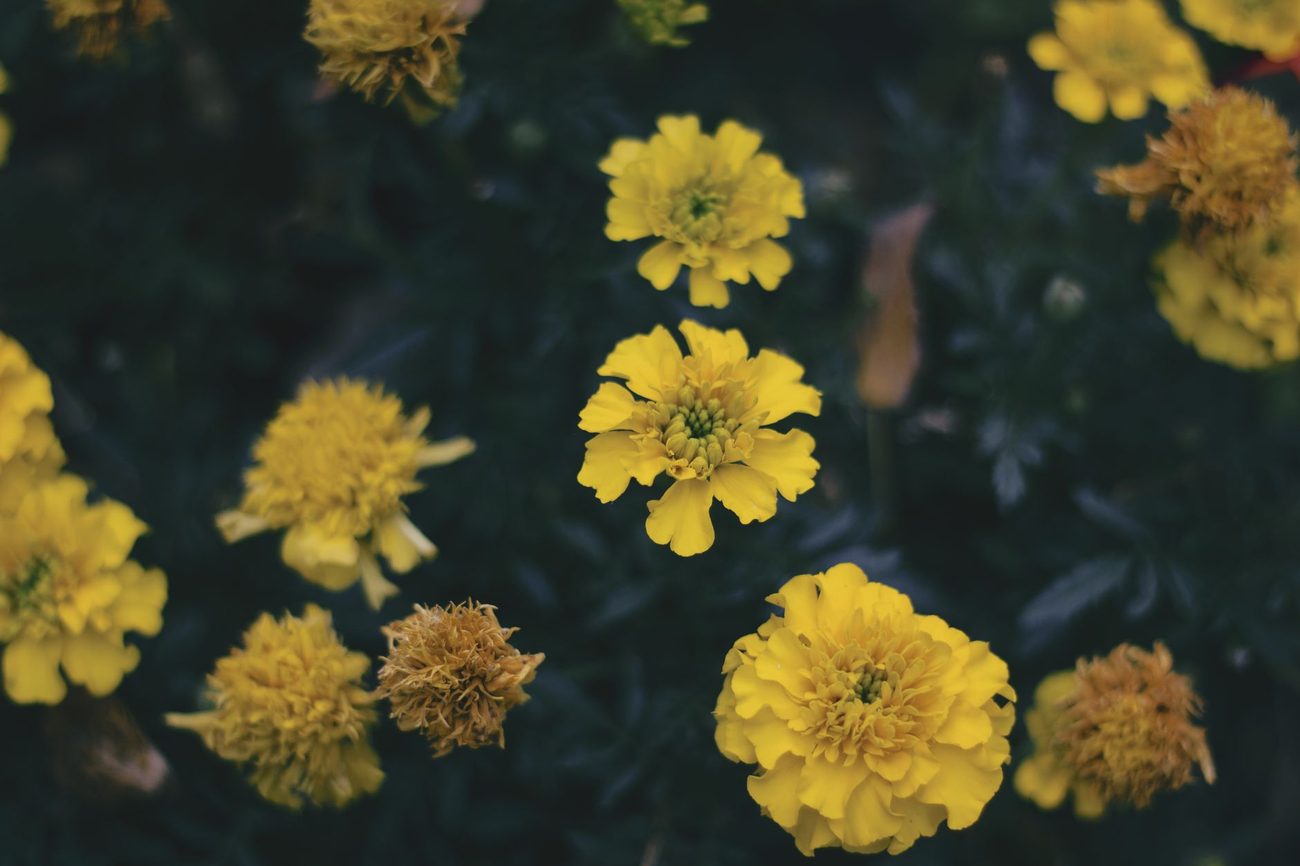
The marigolds grew at the corners of the raised beds and in a couple of porch pots, and they're the most generous seed I save. Pull off a brown, papery flower head, pinch the base and slide out a bundle of long, thin seeds, black at one end and pale at the other, like tiny paintbrushes. One dried head gives 30 or 40 seeds. Ten heads fill an envelope. Kindergartners can handle them without losing half on the floor, which is not true of most seeds.
Drying on the porch, packing in paper
Everything dries for about two weeks on paper plates on the porch bench, under the porch roof where it's warm and the air moves, each plate labeled in marker by flower and color. Pim is very interested in the plates. Pim is not allowed on the bench, a rule he respects about as much as the one about the herb pots.
My mistake, two years ago: I sealed a batch of zinnia seed in a zip-top bag before it was fully dry, and by January it was a gray, fuzzy clump I had to throw out. Now everything goes into paper. I fold small envelopes from printer paper, the same way I teach fourth graders to fold a paper pocket, and write the flower, the color if I know it, and the year on each one.
One honest caveat goes to the kids along with the seeds. These may not grow up looking like their parents. Some of my zinnias came from mixed packets, and the bees move pollen from flower to flower, so a seed from a pink zinnia might bloom orange. A teacher would call that a learning opportunity. Second graders call it a surprise and like it better than I expected.
By the end of the month there will be about a hundred little envelopes in a shoebox in the art room cabinet. Total cost: one paper bag, some printer paper and the patience to let a dozen flowers look terrible for a few weeks.