Every February I go down to the basement, plug in the shop lights and realize I've forgotten everything I swore I'd remember. Which seeds were slow. How many tomatoes were too many. Whether the heat mat was on or off when the peppers finally showed up. It's all in my spiral notebook somewhere, between bed maps and harvest weights, but it's scattered over two years and written in the shorthand of someone with soil under her nails.
So this week, while it's fresh, I'm pulling my seed-starting notes from 2025 and 2026 into one place.
The setup, both years
A 4-tier, 48-inch wire shelf in the basement, LED shop lights hanging on chains, a heat mat and Espoma seed starting mix. In 2025 there were two lights and no thermostat on the mat. In 2026 I added a third light ($29.98) and an $18.99 thermostat. The lights run 16 hours a day on a timer, and I keep them a couple of inches above the leaves, raising the chains as the seedlings grow. A plug-in meter put the electricity at about $12 a month in 2025 and about $16 a month this year, February through May. Four months of seedlings for roughly $64, at our rate of about 27 cents a kilowatt-hour.
Germination, crop by crop
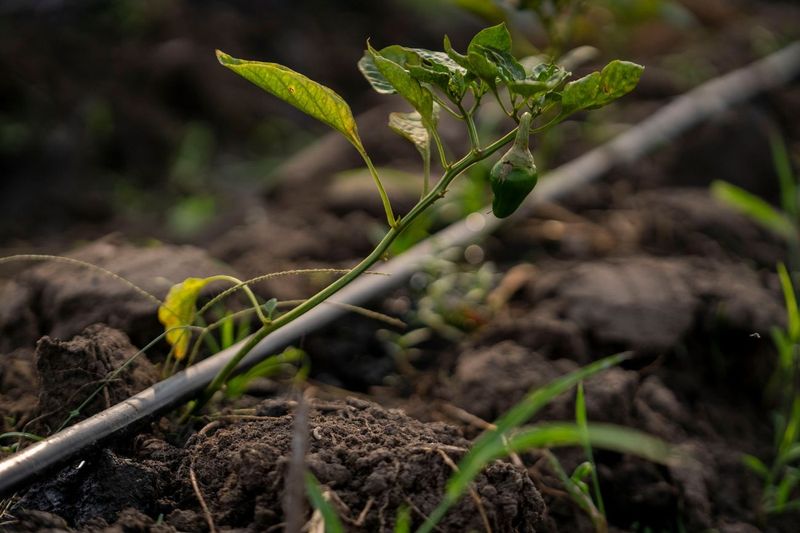
Peppers were the big change. In 2025 I sowed them on March 8 on the mat with no thermostat, and they came up slow and patchy over most of a month, some cells not at all. The mat ran warm in the middle and lukewarm at the edges. In 2026 I sowed on March 1 with the thermostat holding the soil near 80 degrees, and they were up in 9 days, almost every cell. The ají dulce I grew from seed saved on paper plates last September came up just as well as packet seed, which made me ridiculously proud.
Tomatoes never need help. Both years they were up in about a week, and I move them off the heat mat once most of them have broken the surface.
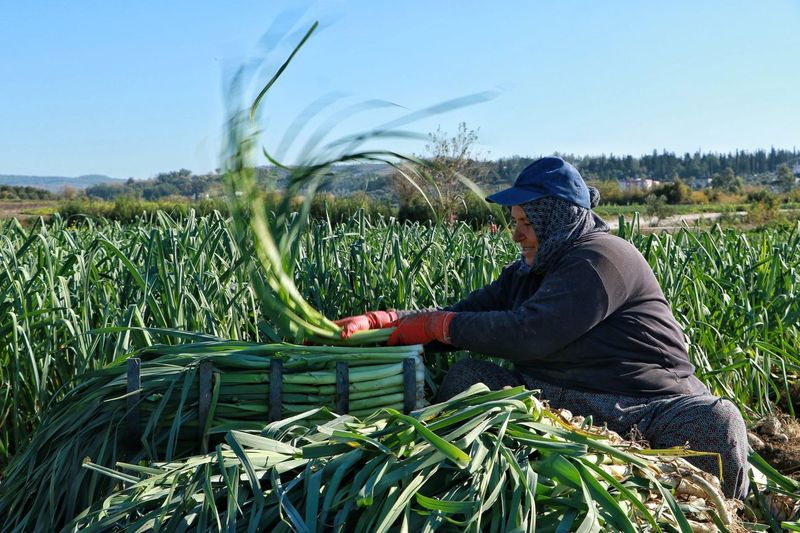
Onions come up like a lawn of green hairpins, the soft blue-green of a new leek. I give them haircuts down to about three inches every couple of weeks, which is the most satisfying chore in the basement. In 2026 I added leeks and a celery experiment. The celery took close to three weeks to show and then spent a month barely bigger than the seed.
Sweet peas (2026 only) went from a February 7 sowing to the chain-link fence on March 21 without a single problem.
The seedlings I always start too early
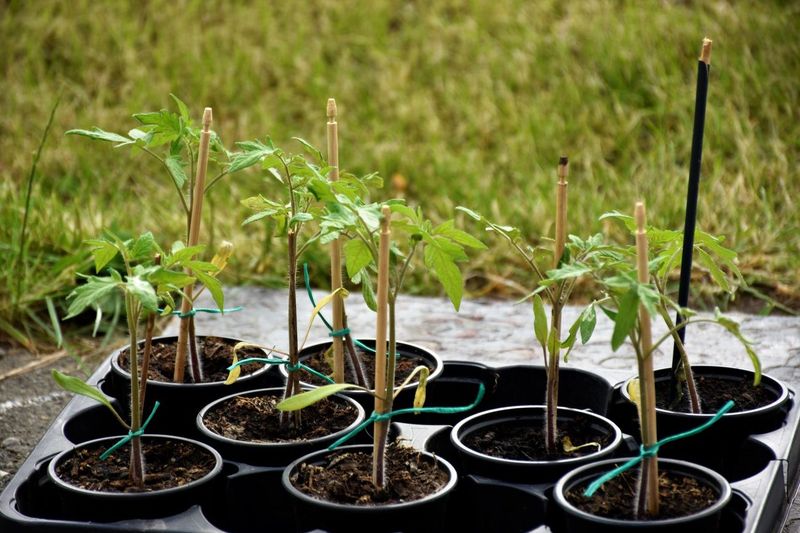
Tomatoes, every year. In 2025 I sowed on March 23 and ended up with 40 seedlings for 12 plants. They went out on May 17, about eight weeks later, and by early May they were pressing against the lights and begging for bigger cups than I had. In 2026 I sowed 30 on March 22 for 10 plants. Then the cold snap from May 8 to 12, with a low of 36 degrees, held planting to May 16, and the last week was all leggy stems and me raising the light chains every other night.
Mother's Day is my frost date, as a rule of thumb, but the real frost does whatever it likes. If the tomatoes go out in mid-May, they don't need to be sown before the end of March. A week later costs me nothing, and it saves a week of babysitting.
Hardening off is where I've lost plants: one tray to afternoon sun in 2023 and another to the wind on our southwest porch in 2024. Now they start in the shade against the house wall and move out an hour at a time.
For next February
- Onions and leeks: mid-winter recess, as usual. Celery only if there's shelf space to spare.
- Peppers: March 1, thermostat at 80. Saved ají dulce seed is fine.
- Tomatoes: March 29, not March 22. Sow 20, not 30. My coworkers will survive with fewer extras.
- Turn on the third light at the first potting-up, not when I notice the stretching.
- Hardening off starts May 1, in the shade, whatever the weather is doing.
Into the notebook, on the inside cover this time, where February me will actually see it.