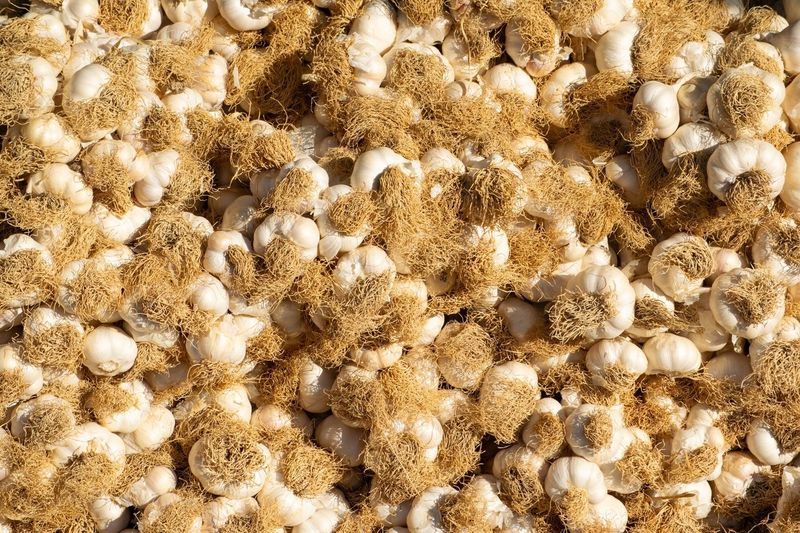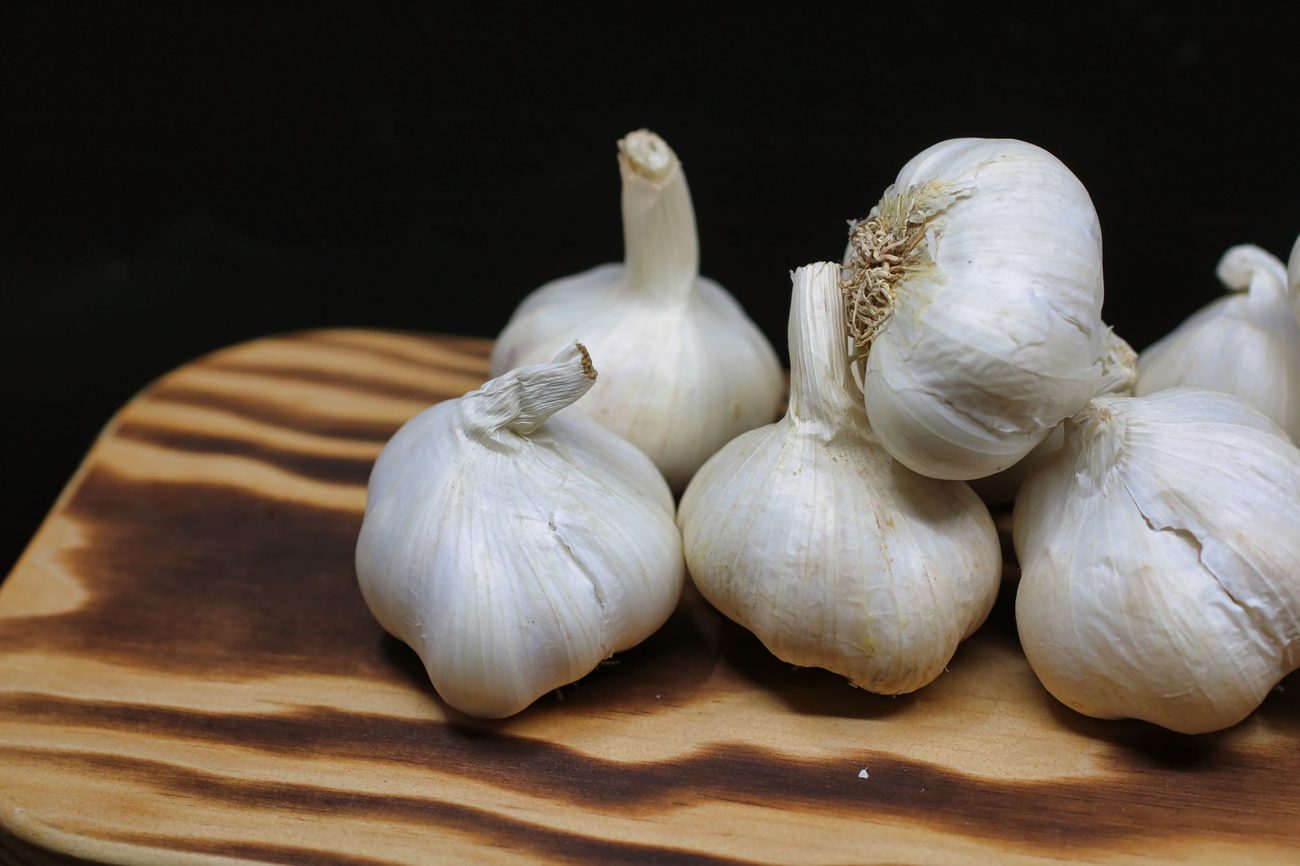
Thirty heads of garlic are lined up on the dining table in rows, like a class picture. That's what's left of the 46 we pulled in July. We've been eating from the small end since August, my mom took six heads home for her sofrito, and I haven't let anyone near the big ones.
Tonight I picked the 12 that will become next year's garlic. It's the most deliberate twenty minutes of the gardening year, and I love it.
Why the biggest heads
Seed garlic isn't really seed. Each clove you plant grows into a whole new head, and bigger cloves tend to make bigger heads. Replanting the best of your own harvest, year after year, is how a variety settles into one particular garden. Ours came to me as eight heads of hardneck 'Music' from Denise, a fourth-grade teacher at my school who grows it in Putnam Valley. Last October 25 I broke them into 48 cloves and planted them in half of the east bed. Forty-seven came up, 46 made heads, and after curing and trimming they weighed about 9 pounds.
This year I'm planting more: about 60 cloves from 12 heads, enough for a little more than half a bed. When I told Denise at lunch, she laughed and said that's how it starts. Her own garlic patch is several times the size of our whole east bed.
How I sort them
No fancy system. I set each head on the kitchen scale, wrote its weight on a sticky note underneath, and then looked at every one closely. What I'm looking for:
- Big and heavy for its size, firm all the way around
- Wrappers intact, with no torn skin exposing a clove
- No soft spots, no mold at the base, no green tip poking out
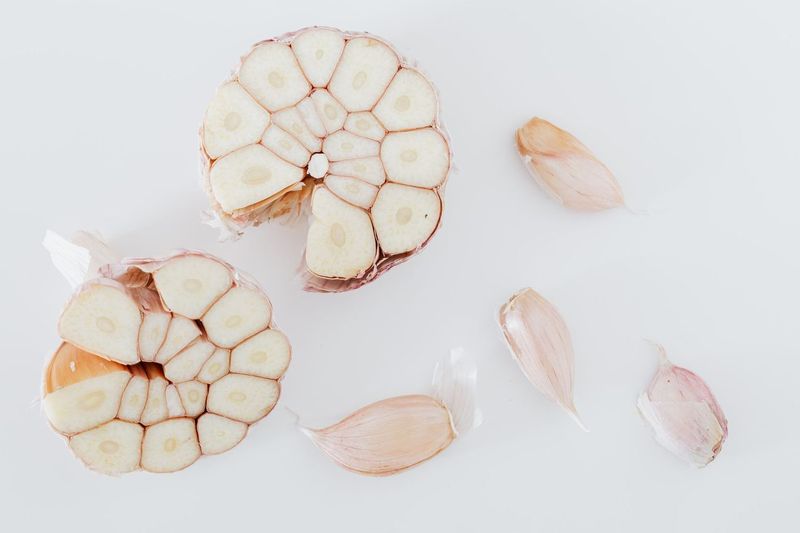
- Fat, even cloves, five or six around the stalk rather than lots of little ones
The twelve heaviest weren't exactly the twelve I kept. One big head had a soft clove I could feel through the paper, and another had wrappers that split while curing, which lets the cloves dry out. Both went to the kitchen basket, and the next two down the scale took their places.
On planting day, only the big outer cloves from each head go into the ground. The skinny ones from the middle go to the kitchen, because a small clove makes a small head, which is exactly what Denise's sticky note was telling me last fall. The remaining 18 heads on the table are ours to eat, and at the rate this family goes through garlic, they should last until about Christmas.
Under the dining room lamp, the papery skins are white with streaks of dusty violet, like watercolor bleeding into wet paper, and no two are quite the same.
Keeping them happy until late October
The 12 seed heads went into a paper bag, whole, on a high shelf in the hall closet. It's the coolest dry spot upstairs and well away from the radiators, which clanked on for the first time this week. I won't break the heads apart until planting day, because once a head is cracked, the cloves start drying out.
My mistake with this batch came right after curing. In August I trimmed the heads and set them in a basket on the kitchen counter, next to the toaster and in the path of the afternoon sun through the window. By September the heads on top felt lighter and papery-dry, and I moved everything to the closet. None of the twelve came from that top layer.
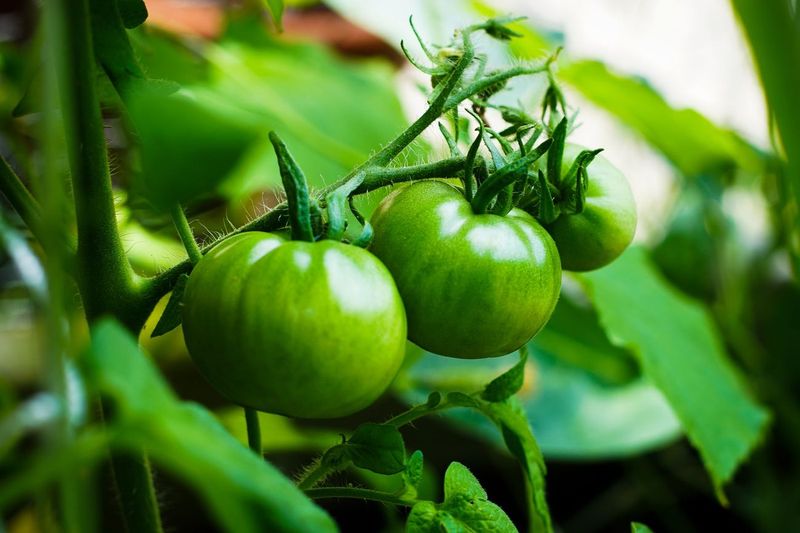
Planting is planned for the last weekend of October. There's been no frost yet this fall, and the tomatoes in the west bed are still going. I haven't decided exactly where the garlic goes. Rotation says not the east bed again, which points to the west bed once the tomatoes come out, but that's a decision for a colder Saturday.
Next year: weigh the seed heads again in October and see if the average went up. That's the only grade this experiment gets.