In April I counted 30 bare tulip stems along our front walk. The night before, they'd been fat buds about to open. The deer that cross our front yard most nights had eaten every one, neatly, as if someone had gone down the row with scissors.
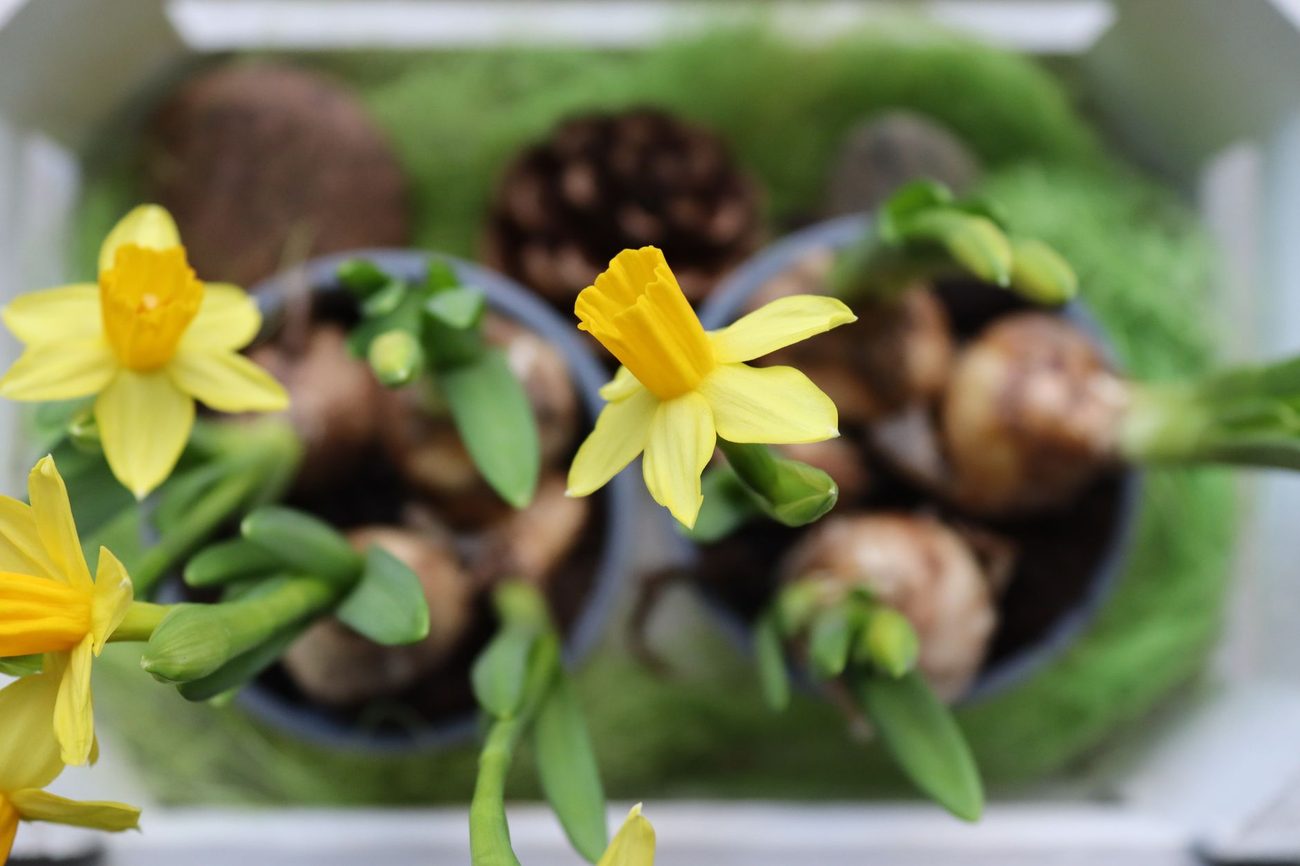
Yesterday, Saturday, November 1, I planted 60 daffodils in the same spot. They cost $34, about 57 cents a bulb, and the whole job took roughly an hour. This morning brought our first hard freeze, and the hose by the steps was frozen solid, so the timing was luckier than I'd like to admit.
Why daffodils
After the tulips, I tried the obvious things. I bought a quart of Bobbex deer repellent for $25.99 and sprayed the rest of the front border with it. It works, mostly, as long as you remember to reapply after rain. It also smells so strongly of rotten eggs and fish that I could tell from the sidewalk exactly where I'd sprayed. It's a decent tool for protecting a few plants, but I didn't want to spend every spring spraying a row of bulbs and hoping.
Daffodils solve the problem at the root, literally. Their bulbs, leaves and flowers contain compounds that are bitter and toxic, and deer, voles, squirrels and chipmunks almost always leave them alone. The houses on our street with the best spring walks all have daffodils, and I've never seen any of those neighbors out there with a sprayer. Tulips, by comparison, are about as tempting to a deer as an open salad bar. The bulbs waited in a paper bag on a high basement shelf until planting day, well out of Pim's reach.
An hour on the front walk
The bag was a mix, mostly classic yellow trumpets with some white and pale cream ones scattered through. I like not knowing exactly what will come up where.
I planted them in clusters of five, 12 clusters along both sides of the walk, instead of in a single-file line. A lone row of daffodils looks like a fence. Clusters look like they got there on their own, and from the porch they'll read as patches of color, which is how I look at everything anyway. Each hole was about six inches deep, roughly three times the height of a bulb, and wide enough for five bulbs set a few inches apart, pointy end up. I didn't add fertilizer. A daffodil bulb comes with its first spring's food already packed inside.
The soil along the front walk is not good soil. It's the original yard, packed hard at the lawn edge, and nearly every hole turned up something: a chunk of old brick, a few gray clinkers of coal cinder from the decades when this house still burned coal, one marble. The brick went in a pile for Sal, who has never met an old brick he didn't want to look at. The marble went in Mateo's pocket.
The bulbs are lovely things to hold, heavier than you'd expect, with papery brown skins the color of a paper grocery bag and a little tuft of dry roots at the base. Mateo dropped them into the holes while I dug, and we argued only once, about whether one was upside down. It wasn't.
When the holes were filled, I watered them in once with the galvanized can so the soil would settle around the bulbs before the freeze. Then I meant to put the hose away, and didn't, which is how I learned about the freeze before my coffee this morning.
What I expect in spring
Daffodils bloom here in April, about when the tulips would have. If they come up the way they're supposed to, they'll come back every year and slowly multiply, which is more than I can say for tulips, even when the deer leave them alone. Mother's Day is my rule-of-thumb frost date, but the daffodils don't care about frost at all. They push through cold mud in March like it's nothing.
The $34 went into the garden budget, which was already over for the year and is now more over. The full damage comes in next week's tally.
Next year: nothing on the front walk that a deer would eat. The deer can have the lawn.