It was 38 degrees at nine o'clock on Saturday morning, and I was kneeling in the east bed in two sweatshirts and the brown canvas apron, with 48 garlic cloves in a paper bag and dirt already under my nails.
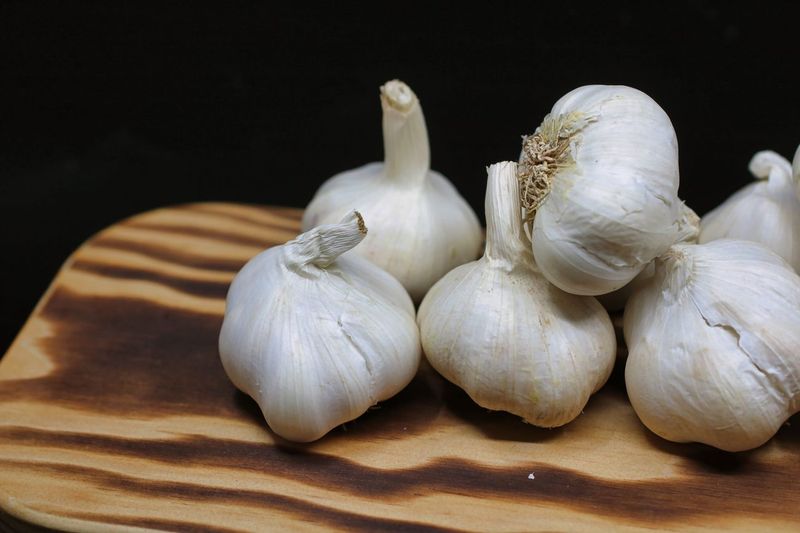
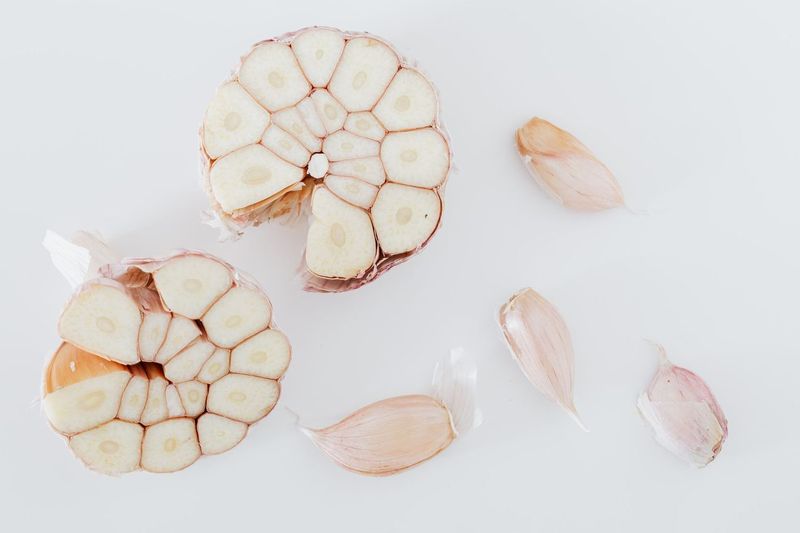
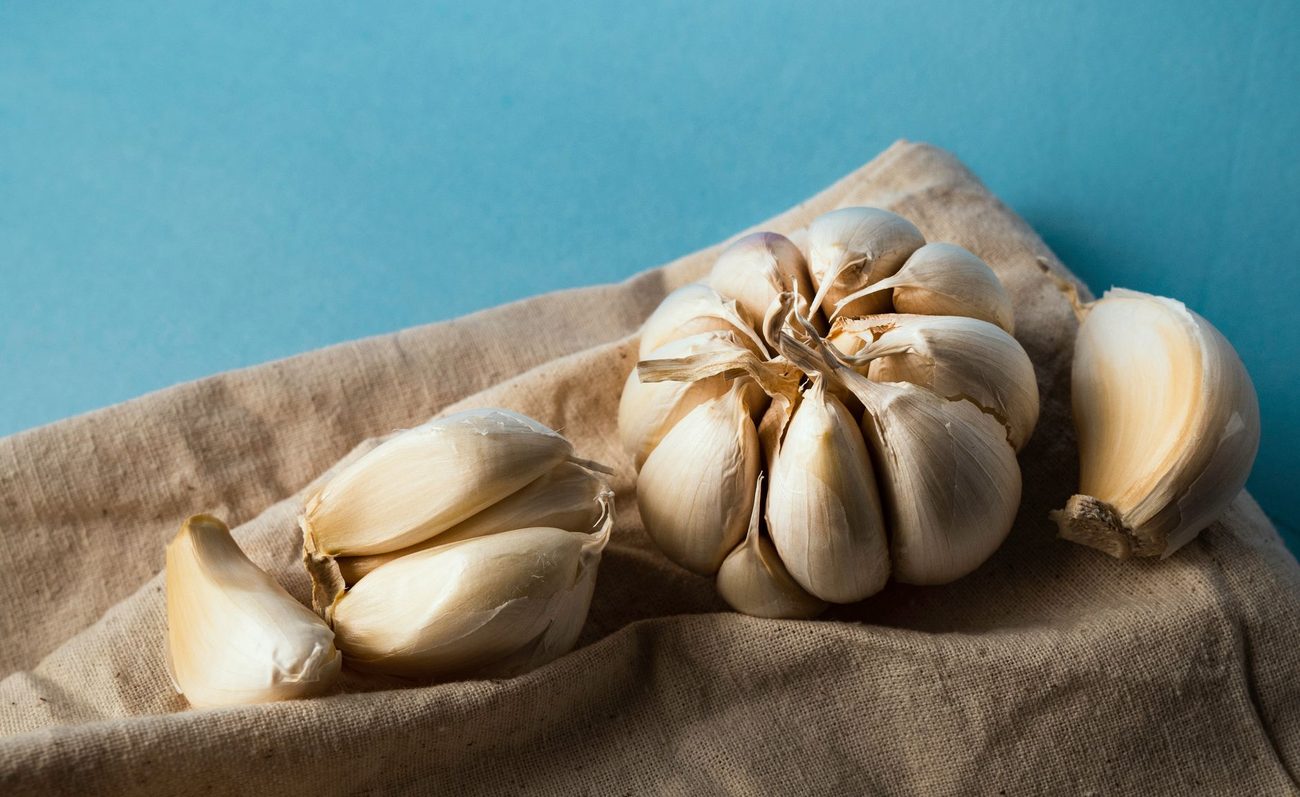
The garlic came from Denise, who teaches fourth grade down the hall from my art room and grows garlic up in Putnam Valley. In September she left a paper bag on my desk with eight heads of hardneck 'Music' from her own harvest and a sticky note that said "big cloves only, pointy end up." Eight heads broke into 48 cloves, six fat ones each, their papery skins washed with pink and violet at the base like the inside of a seashell.
Clearing the bed after tomatoes
The east bed held eight tomatoes this summer, then seven after the maple limb in July, and they were crowded all season. Monday night's frost finished them off, so on Thursday after school I pulled the vines, and on Saturday I did the rest. The cages and stakes are stacked against the back fence, including the two Nate straightened after the storm. The vines went in the trash instead of the compost, because a few had leaf spot by September and I'd rather not carry it into next year.
Then I raked out the old roots and fallen leaves, loosened the soil with a garden fork, and worked the last bag of compost from the spring refill into the half of the bed the garlic would get. Garlic sits in the same spot from now until next July, so this is its one chance at a good start.
Spacing 48 cloves in 16 square feet
The garlic gets half the bed: four feet by four feet, or 16 square feet. Porch math, backyard edition. I settled on six rows across the bed, about eight inches apart, with eight cloves per row about six inches apart. Six rows of eight is 48, and they fit with nothing to spare.
My hori-hori has inch marks on the blade, so it worked as a ruler and a dibber at the same time. Each clove went in pointy end up and flat end down, about two inches deep, then got covered and firmed with my palm. Mateo came out for the last two rows and counted out loud, which kept me honest and kept him from asking about screen time for a solid twenty minutes.
Into the notebook went the bed map: six rows of small green dots in colored pencil, on the page I've already labeled for next year.
Shredded leaves on top
The last step was mulch. Our silver maple drops more leaves than we know what to do with, and Nate runs them over with the mower and bagger, which chops them into a fluffy mix of yellow and brown. I piled about four inches over the garlic. The mulch keeps the soil from freezing and thawing over and over through the winter, which can heave cloves right out of the ground, and in spring it holds moisture and keeps weeds down.
If things go the way Denise says they will, the garlic puts down roots over the next few weeks, maybe sends up a green tip or two before the ground freezes, and then waits until March. The scapes come in June, and the harvest in July, once about half the leaves have browned. I'll believe it when I see it, but she has been doing this a lot longer than I have.
The other half of the east bed is resting under leaves too. If the onions I sow under the lights in February cooperate, they'll go in there in spring, right next to the garlic. The tomatoes move to the west bed next year, and I'm promising myself six of them, not eight, which is what that bed was built for in the first place.
By noon my fingers were numb, and the bed looked like nothing at all, just a smooth brown blanket of leaves with 48 cloves somewhere underneath it.