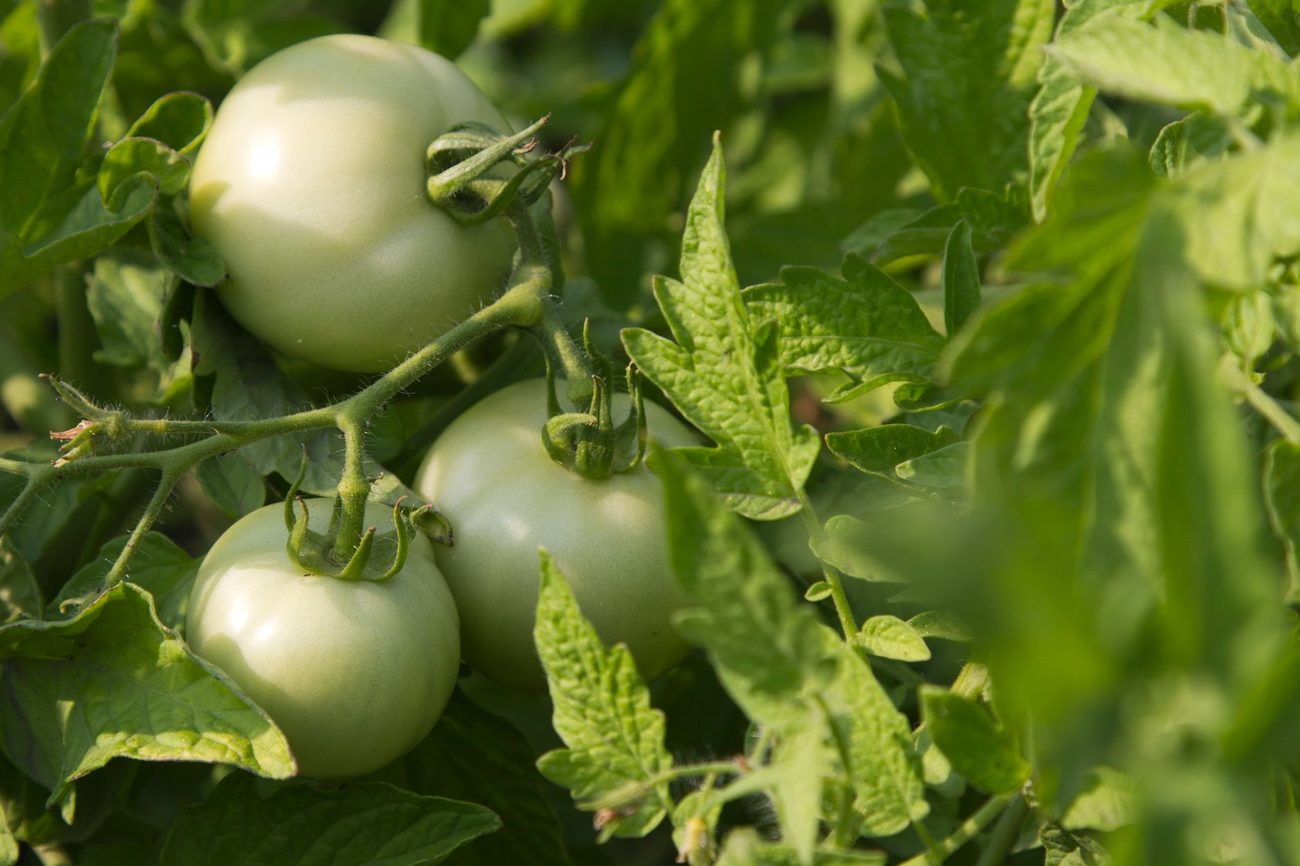
The frost warning popped up on my phone during Sunday lunch: a low of 31 for Monday night. I finished my sandwich, took the woven basket and a five-gallon bucket out back, and stripped every tomato off every vine. By dinner there were nine pounds of green tomatoes on the kitchen scale and a counter that looked like a farm stand that only sells one color.
The forecast was right. It dropped to 31 on Monday night, and this morning the lawn was silver at 6:40 and the last zinnias by the porch hung dark and limp. It's our first frost of the year, right on time, and it also happens to be my 39th birthday. I'm writing this with coffee and a jar of salsa in the fridge, which is a perfectly good way to start 39.
Sorting the pile
Not every green tomato is the same, so I sorted them into two piles on the kitchen table.
The ones with any hint of color, a little pink at the blossom end or a paler, almost whitish green skin, will ripen indoors. They went into a shallow cardboard box in a single layer, not touching, in the cool corner of the dining room. I'll check them every few days and pull anything soft. They won't taste like August, but they'll beat a supermarket tomato in December. That pile came to about three pounds.
The hard, dark green ones, about six pounds, became salsa. Most were paste tomatoes, late San Marzanos and Amish Paste that set fruit in September and never had a chance, plus a few Early Girls and a fistful of green cherries from the porch buckets.
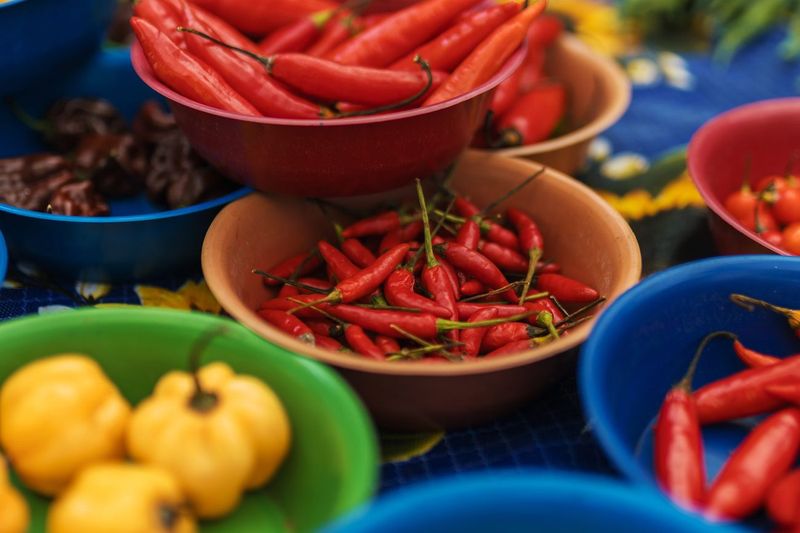
I picked every pepper in the west bed that afternoon too, since peppers hate the cold even more than tomatoes do. That came to a full basket of ají dulce, jalapeños, shishitos and the last 'Carmen' sweet peppers, which turned out to be handy for what came next.
Roasted green tomato salsa
Green tomatoes are tart and firm, a lot like tomatillos, and roasting takes the edge off. For each batch, I cut about three pounds of green tomatoes in half and spread them cut side down on a sheet pan with a quartered onion, two or three jalapeños, four unpeeled garlic cloves and a couple of ají dulce. Everything went under the broiler until the skins blistered and blackened in spots, about 20 minutes, turning once.
Once it cooled, I squeezed the garlic out of its skins, pulled the stems off the peppers and blended it all with the juice of two limes, a big handful of cilantro, a teaspoon of salt and a pinch of cumin. I pulsed rather than ran the blender, so it stayed a little chunky. Then I tasted it and added more lime, because I always do.
Two batches used about six pounds and made a little over five pints. One pint went into the fridge and the rest into the freezer. The color is lovely, a pale celadon green flecked with dark bits of charred skin, like a glaze on an old piece of pottery.
The cilantro came from Stop & Shop, for the record. Mine bolted back in June, the way it always does on our hot porch.
Why it's in the freezer
I didn't can this. It's a recipe I put together by taste, and canning salsa safely depends on following a tested recipe with exact proportions of acid to low-acid ingredients like onions and peppers. I can't vouch for my own proportions, so the freezer it is. If I ever want salsa on a shelf, I'll use a tested recipe from the Ball book or the National Center for Home Food Preservation, word for word.
The first batch had three jalapeños with all their seeds, which Mateo described as "a crime" before going for a glass of milk. The second had two jalapeños and fewer seeds, and he ate it with a spoon.
Next year: the same salsa, but picked a week before the frost warning instead of the day of.