The water bill came on Tuesday: $214 for the summer quarter. Our winter quarters run between $118 and $124, so this one is close to double, and I knew before I opened the envelope that most of the difference was sitting on the front porch in pots.
Our village bills water and sewer together every three months, and the sewer charge is based on how much water comes into the house, even when that water ends up in a tomato bucket instead of a drain. This bill covers May, June and July. That's the stretch when I go from watering a few trays of seedlings to watering 34 containers and two raised beds by hand, with the galvanized can and a hose.
Where the water actually goes
I sat at the kitchen table with the notebook and tried to reconstruct an ordinary July day. It's rough math, but it explained the bill better than I expected.
The porch is the thirsty part. It faces southwest, so it gets sun from late morning until the sun drops behind the houses across the street, and by four in the afternoon in July the bench pots are dry an inch down. The four tomato buckets are the worst. A big cherry tomato in a five-gallon bucket can take a full can on a 90-degree day and still look limp by dinner. Terra cotta loses water through its walls as well as from the top, the galvanized pots heat up like a pan on a burner, and the six strawberry grow bags on the steps dry out from every side at once.
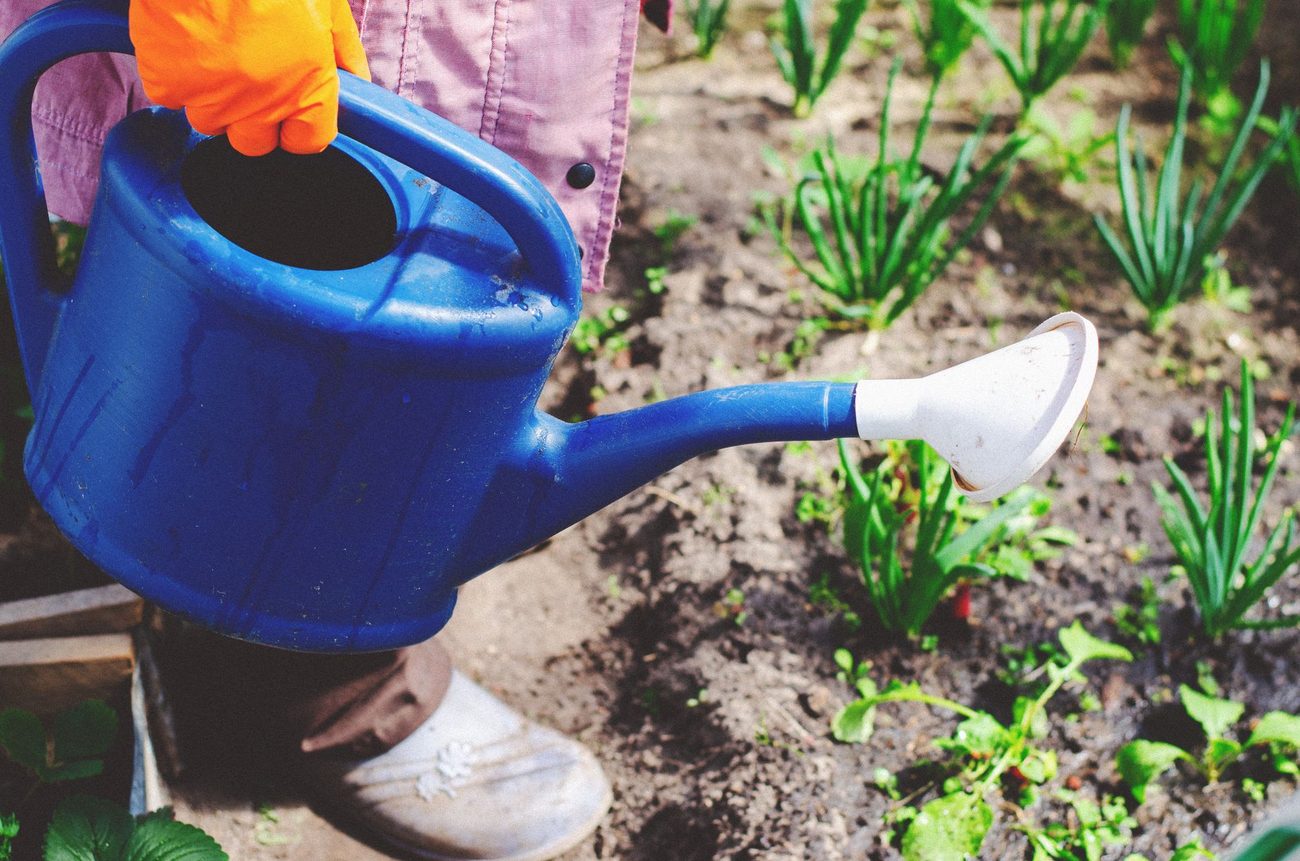
My can holds a little over two gallons, and one round of the porch takes about eight trips to the spigot. On the hottest days I do two rounds, one before eight in the morning and one after six. That's somewhere around 30 gallons a day just for pots, before the hose ever touches a raised bed. On those evenings the can sweats in my hand, beaded with cold water from the spigot while everything around it is hot.
The beds are easier to keep happy because the soil is deep and mulched with shredded leaves. Still, the east bed holds seven tomatoes now (eight until the maple limb took one) and the west bed has nine pepper plants. I give each bed a slow soak with the hose every two or three days, more in a heat wave. The hose is where I'm least careful. One evening in July I left it trickling into the west bed while I talked figs with Sal over the chain-link, and when I came back the path between the beds was a pond.
What the garden added to the bill
If I take an average winter quarter as our baseline for showers, dishes and laundry, the garden added roughly $90 to this bill, give or take a few dollars. Spread over three months, that's about a dollar a day for everything on the porch and in the beds.
I don't count water in the garden budget. When I set this year's budget, I decided it would cover the things I buy for the garden (seeds, soil, plants, supplies), and household bills would stay household bills. But I write the water number in the notebook next to the harvest log, because it's part of the honest picture. Right now a dollar a day is easily covered by what we're picking: the first ripe tomatoes, a steady stream of herbs, cucumbers off the fence. In June, when the porch was mostly leaves and promises, it was a worse deal.
What I'll change
- Water deeper, less often. Short splashes twice a day wet the top inch and run straight out the drainage hole. A slow soak until water comes out the bottom, then waiting until the top inch dries, seems to work better for the bench herbs.
- Mulch the pots. The beds get shredded leaves, but the pots never have. A layer on top of each tomato bucket should cut down on the baking.
- Group the thirstiest pots. Porch math again: buckets and grow bags together where I can reach them all from one spot, and the herbs that like it dry (rosemary, thyme) out at the far end.
- Use a timer. Not a fancy one. The kitchen timer, every single time the hose goes on.
- Catch some rain. We have two downspouts on the back of the house, and both dump straight onto the lawn. Nate thinks diverters and a pair of rain barrels would be an easy weekend project.
I haven't priced the rain barrels yet. They'd have to be cheap to pay for themselves at a dollar a day, and I already suspect the payback is slower than the internet makes it sound. But a barrel by the back steps would mean fewer trips to the spigot, and on a 92-degree evening in July that's worth something too.
Next year: rain barrels on both back downspouts, and the kitchen timer goes in my apron pocket next to the twine.