The fig went down to the basement on November 15 with four yellow leaves still hanging on, and by the next morning they were on the coal room floor. That's how it should go. A fig in a pot can't stay out through a Hudson Valley winter, but it doesn't want to be a houseplant either. What it wants is a long, cold, dark nap, and our 1924 house happens to have the perfect room for one.
Sal's cutting, four years on
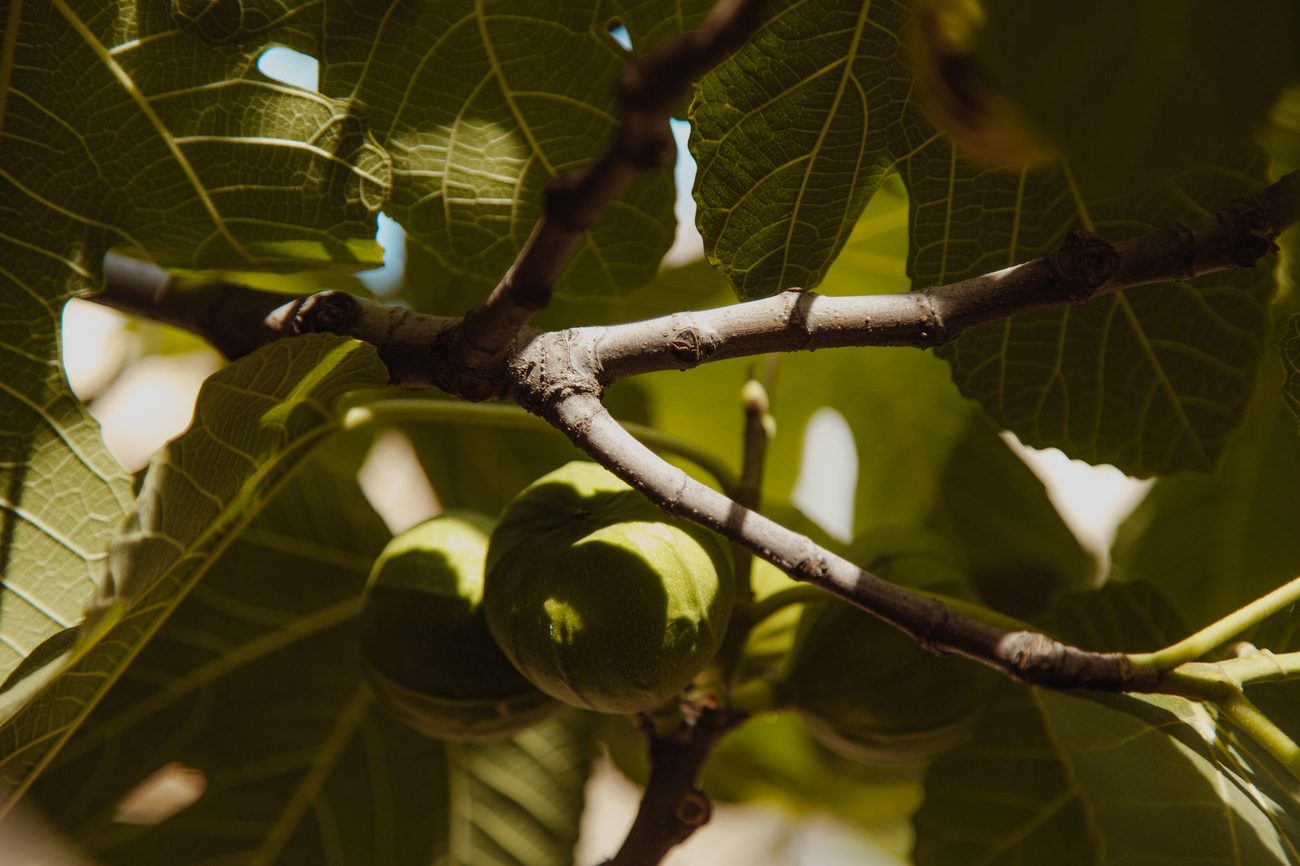
The tree started as a pencil-thick cutting from our neighbor Sal, who grows figs on the other side of the chain-link fence and calls the variety "the Calabrese." He handed it to me in a coffee can in 2021 and told me it would either root or it wouldn't. It rooted. Four years later it's about 5 feet tall in a 20-gallon fabric pot, and it gave us 31 figs this fall. That doesn't sound like much until you've eaten a warm one standing on the porch steps.
Sal's own trees are in the ground, and every November he wraps them the old way, in burlap with a bucket on top, so they look like a row of short ghosts along his side of the fence. Ours lives in a pot because we have nowhere in the yard to plant a fig, and because a pot can go indoors.
Why the coal room works
Our basement still has the small brick room where coal was delivered before the oil boiler went in. The chute window was boarded up long before we bought the place in 2019. There's no heat in there and almost no light, and in winter the thermometer I hang on a nail reads somewhere between 35 and 45 degrees. That's the sweet spot for a dormant fig: cold enough that it stays asleep, but nowhere near the kind of cold that kills roots, which are much more exposed in a pot than in the ground.
I learned this the hard way. The first winter, I put the young tree in the main part of the basement near the boiler, thinking warmer was kinder. It leafed out in February. The new shoots came up pale and floppy from reaching for light that wasn't there, and when the tree finally went outside in spring, most of them scorched in the first sunny week. Into the notebook that went, underlined twice.
How the move goes
The routine is simple now, and it takes most of one weekend afternoon.
First I wait for the cold to do its job. Our first light frost was October 20 and the hard freeze came November 2, and between the two the leaves yellowed and started to drop. A fig that loses its leaves outside goes dormant much more smoothly than one dragged in green, and a few frosty nights don't hurt the wood.
Then I stop watering for about a week and push the pot back under the deepest part of the porch roof, where the rain can't reach it. A 20-gallon fabric pot of wet soil is something I can't budge. Drier, Nate can tip it onto the hand truck.
On moving day I tie the branches up loosely with soft twine so they fit through the bulkhead doors, and Nate wheels it down the outside steps while I walk backward in front of it saying "slow" far too many times. It sits on two scrap boards in the coal room so the bottom of the pot isn't on cold concrete.
Once it's down there, the care is almost nothing. Every four weeks or so I carry down about half a gallon of water and pour it slowly around the edge. The goal isn't to make it wet, just to keep the root ball from going bone-dry, which can kill a potted fig as surely as cold. I check the thermometer when I water. If a January cold snap drops the room into the low 30s, I'm not worried. If it ever stays above 50 for long, I will be, because that's when the tree starts thinking about spring.
Right now the bare branches are a smooth silvery gray, close to the color of the graphite sticks I hand out to fifth graders, with fat green buds at the tips. I go down every week or so anyway, mostly just to look.
Around mid-April it comes back up, first to the shady end of the porch for a week so the new leaves can toughen, then out into the sun. If a frost threatens after that, it gets wheeled back under the roof for the night. A five-foot tree on a hand truck and a woman in pajamas is a sight the neighbors have seen before.
Next year: a pair of rope handles sewn onto the fabric pot, so two people can lift it without hugging it.