On Monday it was 71 degrees, and I taught a room full of first graders with the windows open and my sleeves pushed up. On Wednesday morning I scraped frost off the Subaru's windshield before the drive north to school. That's April in northern Westchester, and it's why the greens I sowed on Tuesday are living under a sheet of row cover.
I sowed them Tuesday evening once garden club let out, with about an hour and a half of light left. Cool crops are the only thing that can go straight into the beds this early. Lettuce, spinach and radishes germinate in cold soil and can take a light frost. They just don't love being whipsawed between summer and winter in the same week, and the cover softens that.
Laying out the west bed
The west bed is 4 by 8 feet, and by mid-May it has to hold a lot. The far end already has the 60 onion starts from February, which went in at the end of spring break in a strip about twenty inches wide. The near three feet stay open for nine pepper plants on May 17. That leaves a section in the middle, about three feet by four, for the greens.
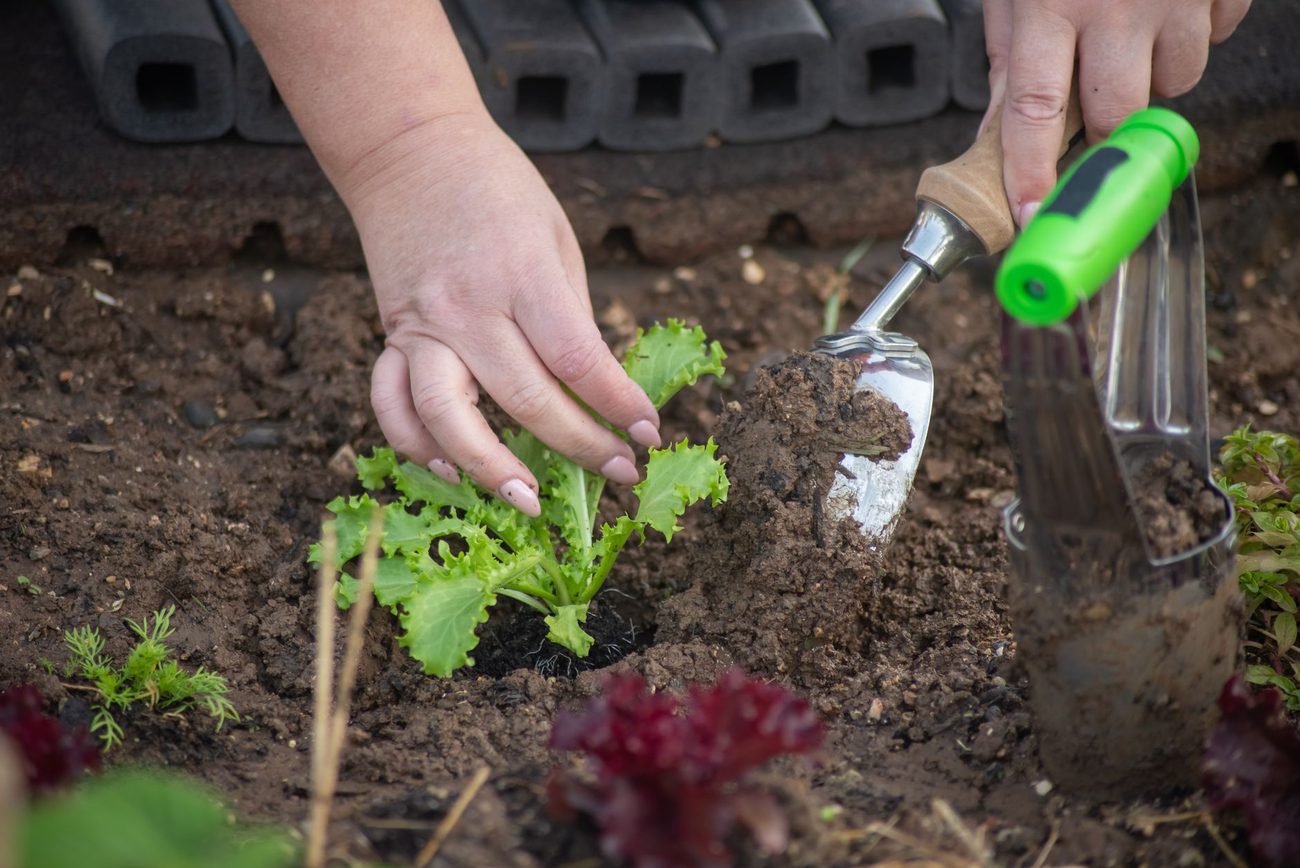
In the middle section I sowed three short rows of a lettuce mix from Hudson Valley Seed Company and three rows of 'Bloomsdale' spinach from the shoebox, all about six inches apart. Lettuce seed barely gets covered, maybe an eighth of an inch, since it likes some light to germinate. Spinach goes about half an inch deep. The radishes, 'French Breakfast' from an old packet, went along the front edge of the pepper section, an inch apart. Radishes are ready in about four weeks, so most of them should be pulled by the time the peppers need that ground.
The soil there got an inch of compost earlier this month, so all it needed was loosening with the hori-hori and a rake. I firmed each row with my palm and watered with the galvanized can, using the rose so the seed wouldn't wash into a corner.
The old row cover
The row cover is a lightweight fabric from Gardener's Supply Company that I bought in 2021. It has been patched with clear packing tape in three places and has one hole I've decided is decorative. It lies over five hoops of stiff wire pushed into the sides of the bed, and the edges are held down with bricks.
What it does for us: on clear, still nights it holds in a few degrees of warmth, which can be the difference between frost-nipped lettuce and fine lettuce. It keeps the soil surface from drying out in the April wind, so the seed stays damp without me watering twice a day. And it keeps birds, squirrels and flea beetles off, the last of which otherwise turn radish leaves into lace.
The tradeoffs are real. Weeds love it under there as much as the lettuce does. On a warm sunny afternoon, the air under the fabric gets noticeably hotter than outside, and spinach takes heat as a signal to bolt. So on any day forecast above the mid-70s, I fold the cover back in the morning and pull it over again in the evening. That only works when I'm home, which during the school year means I'm guessing a lot.
In the late light on Tuesday the cover glowed like tracing paper held up to a window, with the bed's dark soil showing faintly through.
A short season on purpose
These greens are a sprint. Once real heat arrives in late June, the lettuce bolts and turns bitter, and spinach usually gives up even earlier as the days get long. Mother's Day is my frost date for tomatoes, but these crops don't care about Mother's Day. They care about getting a few cool weeks to grow before summer arrives.
My mistake last year was sowing the lettuce too thick and never thinning it, out of some idea that more seed meant more salad. I got a crowded mat of skinny leaves that stayed wet at the base and got chewed by slugs. This year the plan is to thin early and eat the thinnings as baby greens.
The radishes should be up by Sunday. Mateo has already claimed the first one, which he will pull, eat, make a face about, and then claim the second one anyway.