At nine o'clock yesterday morning, the first day of mid-winter recess, I was sitting on an overturned bucket in the basement with a bare seed flat on my knees and Pim supervising from the top of the dryer. The basement thermometer said 57 degrees. Upstairs, Mateo was still asleep, which is the real luxury of February break for everyone in this house.
This is my first year starting onions from seed. Until now I bought little mesh bags of onion sets at the hardware store each April, and we got onions about the size of golf balls, a few of which bolted by July. Starting from seed takes longer and asks more of the basement shelf, but it lets me grow real storage varieties, and it gives the plants the early start they need to size up before the longest days of June.
Sowing them thick
Onion seedlings don't mind being crowded, so I skipped cell trays. I used two square half-size flats, about ten inches on a side, filled two inches deep with Espoma Seed Starter that I'd moistened in a bucket until it felt like a wrung-out sponge. One flat got the yellow storage onion and one got the red, both from this year's Johnny's order.
I pressed shallow furrows with the edge of a ruler, nine rows an inch apart, and dropped roughly eight seeds per row. That came to about 70 seeds per flat, or around 140 total. The plan is 60 onions at the far end of the west bed in April. Onion seed isn't always eager, and I'd rather thin than come up short. A light dusting of mix went on top, then a clear plastic dome, and a quick mist from the spray bottle.
Here is my mistake, right on day one. I labeled the first flat, got distracted refilling the bucket, and set the second flat on the shelf with no label at all. They look identical right now, two trays of damp brown. Red onion seedlings usually show a faint pink blush at the base after a few weeks, so I'll find out eventually. Into the notebook it went, with a question mark.
Light, heat and haircuts
The flats sit on the seedling heat mat under the two LED shop lights, which run 16 hours a day on a timer. The mat has no thermostat. It just warms the soil 10 to 15 degrees above the basement air, which in February puts it somewhere around 70. That's plenty for onions. Once most of the seeds are up, usually in a week to ten days, the flats come off the mat so the peppers can have it in early March.
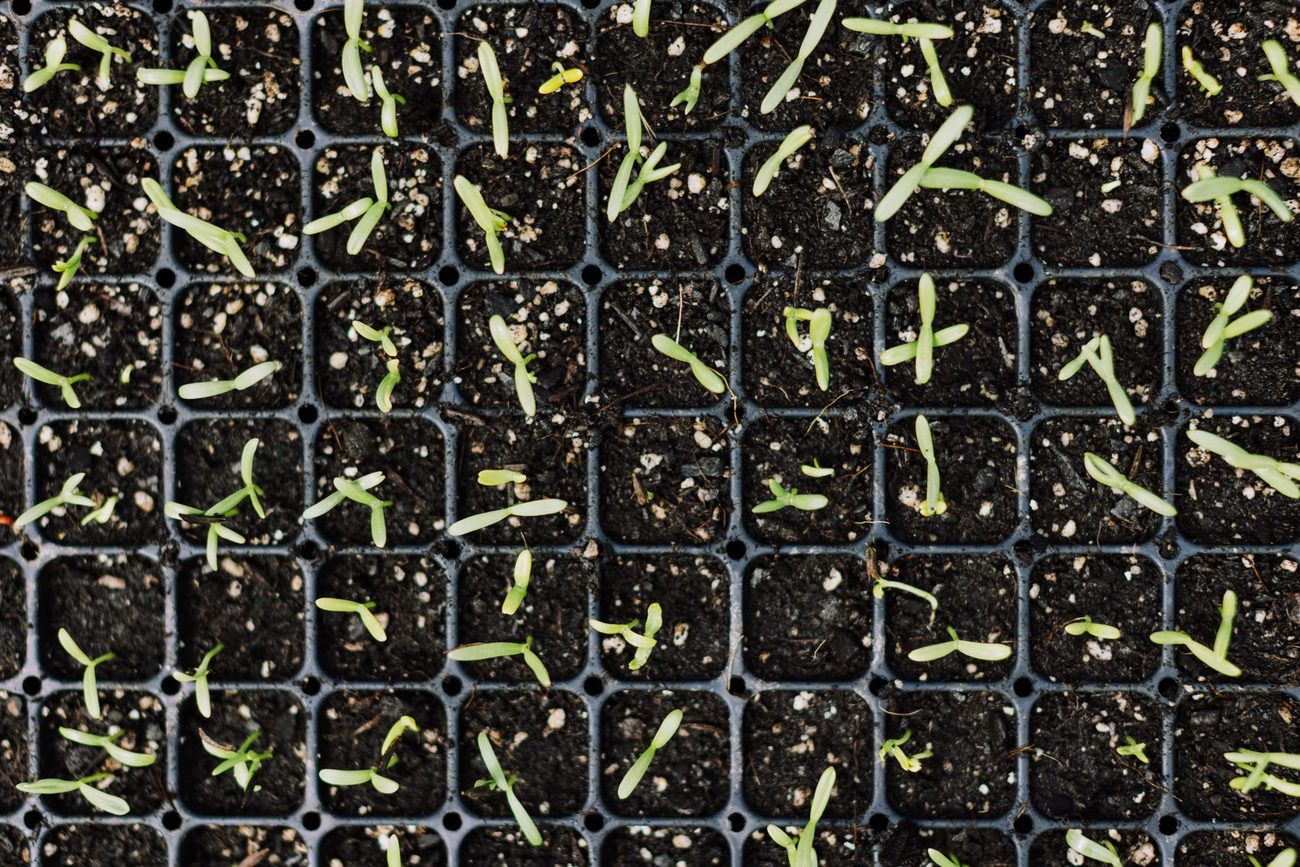
I keep the lights two or three inches above the flats and raise the chains as things grow. Onion seedlings start out looking like a thin, bright green lawn, and then they flop over like overcooked spaghetti. When they get to about five inches tall, I'll give them a haircut back to three inches with kitchen scissors. It feels wrong the first time. The trims keep the seedlings upright and sturdy instead of long and tangled, and they make transplanting much easier. The clippings taste like mild chives, and I fully intend to put them on scrambled eggs.
The plan from here
If all goes well, by mid-April I'll have two flats of seedlings about as thick as a pencil lead, each trimmed four or five times. They'll go out to the porch for a week to toughen up, which onions handle fine even on cold nights, then into the west bed about four inches apart. Sixty onions at that spacing fit in a strip roughly four feet by twenty inches across the narrow end of the bed, which is a small price in space for something we use every single day.
What I'm hoping for is a basket of storage onions curing on the porch in late summer, the papery skins going the color of weak tea. What I'm prepared for is a basket of slightly bigger golf balls. Either way, it's information.
Around ten thirty Mateo came down the basement stairs in pajamas and a hoodie, looked at two flats of what appeared to be plain dirt, and asked if onions were really worth all this. I told him we'd know in August. He went back up for cereal, and Pim followed him.