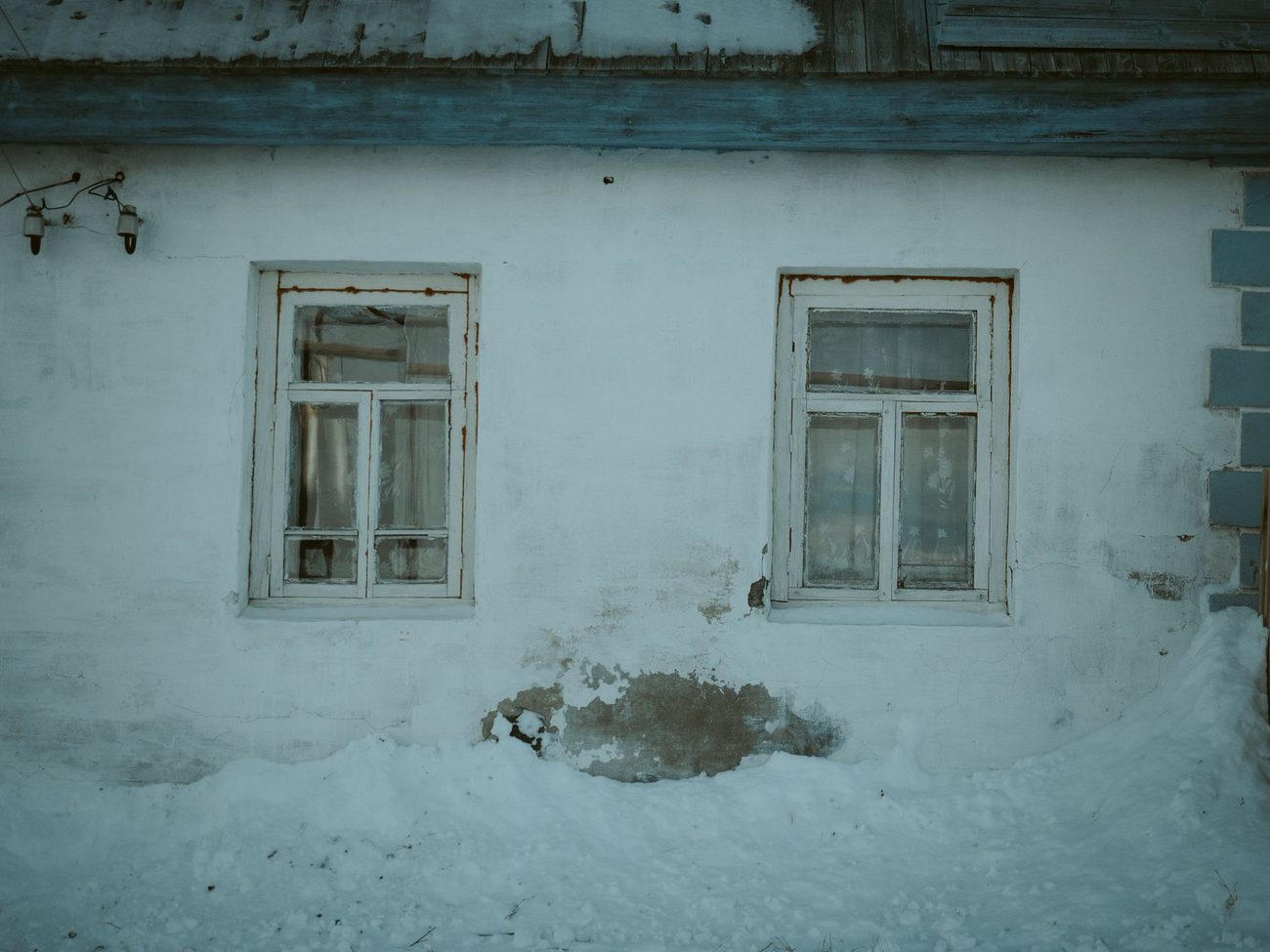
Two old storm windows have been leaning against the basement wall since we moved in, in June 2019. They're wooden, painted a white that has yellowed to the color of old piano keys, and each one is about 24 inches wide and 32 inches tall. Every spring I suggest throwing them out, and every spring Nate says "those could be something." On Friday night they became a cold frame.
Building it from what we had
A cold frame is just a bottomless box with a clear lid, set over soil. The glass traps the sun's warmth during the day and keeps off the wind and the worst of the cold at night. Ours sits right on top of a raised bed, which helps, since the bed is already 11 inches of loose, decent soil.
Nate built the box from scrap boards in about two hours. Side by side, the two windows make a lid 48 inches wide, which happens to be exactly the width of our beds, so the frame spans the narrow end of the west bed and covers a strip about 32 inches long. The back board is 12 inches tall and the front is 8, with the sides cut on a slant so the glass tilts toward the sun and rain runs off. The windows just rest on top. To vent it, I prop them up with a scrap of two-by-four that Nate cut into steps, so I can open them two, four or six inches.
The paint on those sashes is old enough that I assume it has lead in it, so we didn't sand or scrape anything. Nate wore gloves and wiped them down with a damp rag, and if the paint ever starts to flake, the glass gets swapped for plain plastic panels. I'd want any old window tested before I took sandpaper to it.
Total cost: a handful of deck screws from the coffee can on Nate's workbench.
Sowing the spinach
The frame covers the end of the west bed where our onions grew this summer. They came out in late July, and the fall lettuce I sowed there in August is now about the size of my palm. On Saturday morning I loosened the soil in front of the lettuce, worked in a little compost, and sowed three short rows of spinach about an inch apart and half an inch deep. Once they're up, I'll thin them to three or four inches apart and add the thinnings to a salad.
Spinach is the right crop for this. It germinates in cool soil, grows slowly through October and November, and mostly stops once the days get short. Under glass, the plants should sit through the winter as small rosettes, and when the light comes back in late February and March they start growing again. That's the plan, anyway. This is my first try at overwintering anything in a frame, so I'm going on Cornell Cooperative Extension's fact sheets and what Sal remembers from his father's garden, not on my own experience.
If it works, we'll be picking spinach in March, weeks before anything sown in spring is ready, out of a box that cost us a few screws.
The part I'm worried about
Heat, oddly. On Saturday afternoon, with the lid closed and 70 degrees outside, the old thermometer from my seed shelf read 88 inside the frame. On a sunny fall day a closed frame can cook the very plants it's supposed to protect. My rule for now is that the lid opens on any sunny morning above about 45 degrees and closes again before dark. On school days that job goes to whoever leaves the house last, which is usually Nate, who has been briefed.
Snow is the other question. Old single-pane glass can handle a light snow, but I'll brush it off after any real storm so the weight doesn't crack a pane and the spinach still gets some light. Mateo has been told that the backyard is closed for pitching practice until spring.
When I went out at dusk to close it, the glass was holding the last of the light, two pale rectangles glowing over a bed of dark soil, and the inside was still warm when I lowered the lid. If nothing comes of it, I'll at least have two storm windows that finally earned their spot in the basement.