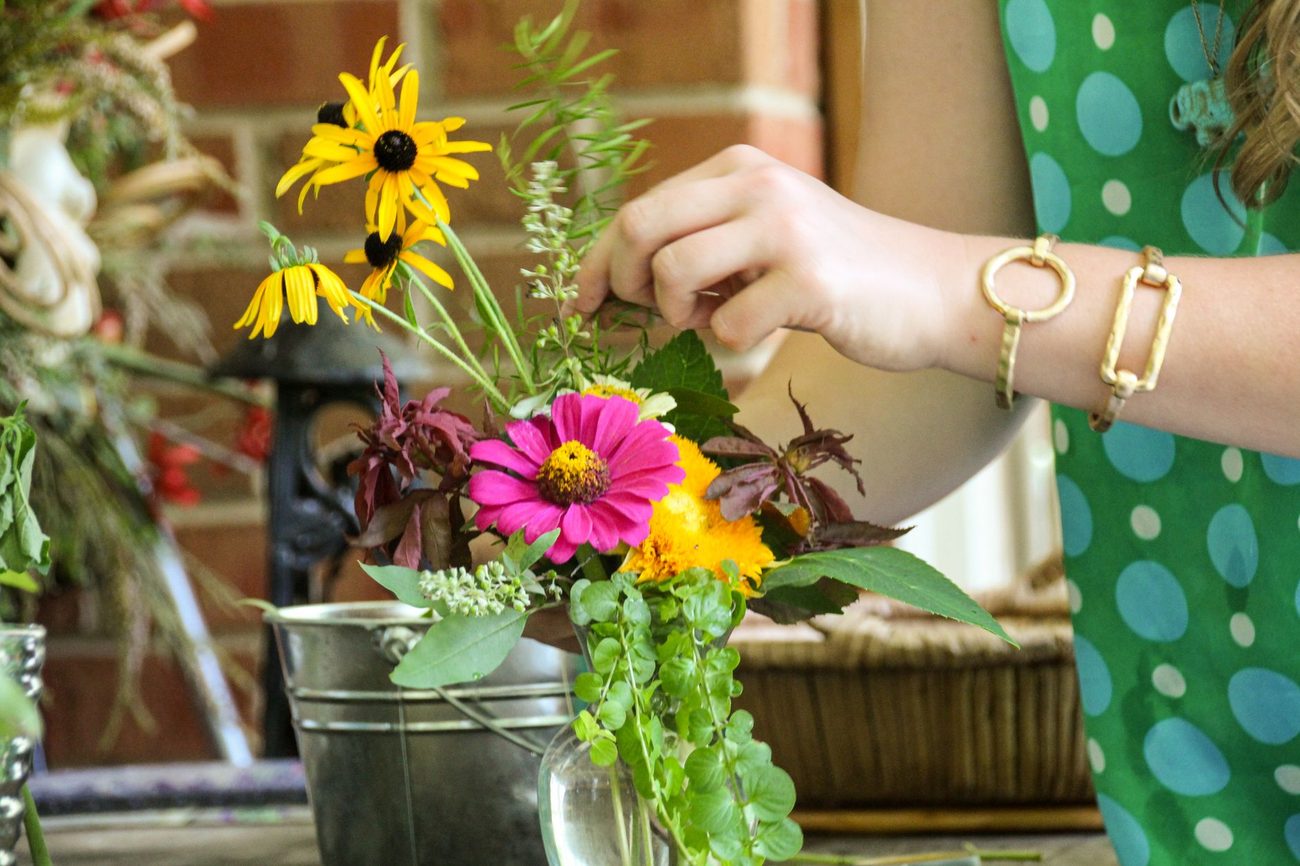
A second grader asked me in October why the flowers on our still-life table were always fake. It was a fair question. The silk sunflowers in my classroom have been there for over a decade and have been drawn by a few thousand kids. I told her I'd try to bring real ones next fall. Then I went home and realized I'd have to grow them.
That's the reason, or at least the excuse, for the cut-flower row. I want flowers for the house and a bucket of zinnias for my classroom every Monday in September. What I have to work with is a 2-by-8-foot strip along the chain-link fence on the north side of the backyard, which gets about six hours of sun at the height of summer.
Six hours is enough for some things
Six hours is the low end of "full sun," and I've learned what that means in practice. Flowers that want blazing sun from dawn to dusk, like dinner-plate dahlias, would need staking, digging, winter storage and fuss I don't have time for, and they'd probably sulk anyway. So dahlias went on the "someday" page. What I want are flowers that are cheap from seed, happy in ordinary soil and better the more you cut them.
Three made the list:
- Zinnias, the workhorse. Sown after frost, cut-and-come-again until October. Last summer I squeezed a few into the border beside the porch and some pots, and even while fighting Japanese beetles they bloomed for months.
- Cosmos, airy and fast, and they actually prefer poor soil. Too much fertilizer gives you all leaves. They get tall, so they need a spot where they won't shade anything else.
- Snapdragons, the one cool-season flower. They want a head start indoors, shrug off a light frost and bloom early, before the zinnias get going. If I cut them back after the first flush, they should come again in fall.
Drawing it out, to scale
I drew the strip on graph paper at one square to three inches, which made it a long skinny rectangle that looks like a bookmark. Then I colored it in, because that's how I think.
The chain-link fence is already busy in spring. Snap peas go on it every March, and this year the sweet peas get an 8-foot section of their own. The peas take the six inches of soil right up against the wire, and the flower strip sits in front of them. By the time the peas finish in early July, the zinnias and cosmos will be getting tall, so the two share the space more than they fight over it. That's the theory.
Here's how the 16 square feet divide up on paper.
Snapdragons at the end nearest the back steps, about 2 1/2 feet of the row, spaced 6 inches apart. That's 4 across and 5 deep, so 20 plants. They're the shortest and they'll be done first, and that end is where I'll see them every time I take out the compost.
Zinnias in the middle, about 3 1/2 feet, at 9 inches apart: 3 across and 4 deep, 12 plants. Mostly a tall mix in the colors my students would pick, hot pink and orange and a red that's almost purple.
Cosmos at the far end, the last 2 feet, a foot apart, so 4 plants. They'll reach 4 or 5 feet and can lean on the fence if they need to.
That's thirty-six plants in a space smaller than our kitchen table. On the drawing it looks like a striped scarf.
What could go wrong
Plenty. Japanese beetles love zinnias, and I'll be out there every morning in July with a jar of soapy water like last year. The strip also runs along the side fence, not the back fence where we put the hardware cloth, so if Gus decides to explore, he has an easier route. I don't know whether Gus likes zinnias, and I'd rather not find out the way I found out about beans.
The other risk is me. I always want to cram in one more plant. The spacing above is already a little tight for zinnias, and I'm going to hold the line.
The cost is low. The seed packets were part of the order I placed last week, and the strip needs two bags of compost worked in, which come out of the soil line in this year's budget. The snapdragons get sown in the basement in early March, in one corner of the seed shelf. The zinnias and cosmos go straight into the ground after Mother's Day, which is my frost date as a rule of thumb and has never once steered me wrong with zinnias.
By next September that second grader will be in third grade. I'm hoping she still wants to draw them.