The first seed catalog arrived on December 1, folded into the storm door because it didn't fit in the mailbox. By the end of that week there were five on the kitchen table, and by the second week I'd caught myself reading one while the pasta water boiled over. This happens every year. In December I want everything, the purple carrots and the striped eggplants and the melon that supposedly ripens in 70 days, and I live on a lot where two 4-by-8 beds and a porch are the whole farm.
So I made rules. Not because I'm disciplined, but because I'm not, and the numbers prove it.
The year I bought the catalog
In 2024 I spent $104 on seeds. That was before we had a garden budget at all. When I emptied the seed box this fall to sort it, about a third of those 2024 packets were still sealed or barely opened. Some were for crops I had no room to plant even if I'd wanted to, like a winter squash that wanted 10 feet of vine and a sweet corn I must have ordered in a fever dream.
This year I spent $98 on seeds: $86.40 on the February order and the rest on rack packets from the hardware store. Better, but not by as much as I'd like, especially since we went over the overall budget.
Here's what I go by now when I sit down with a cup of tea, a pencil and a pad of sticky tabs in three colors.
My four rules for marking up a catalog
- Did we actually eat it? Not "did it grow," but did it end up on a plate. My harvest log is the judge. We ate every one of the 6 pounds of snap peas, mostly standing at the fence, so peas stay. We picked 9 pounds of beans even after Gus took the first sowing, so beans stay.
- Does it fit? This is porch math. I look up a plant's spacing and height before I let myself read the description, because the description will always win. If it needs more than six hours of sun or more than a few square feet, it had better be something we love.
- Two failures and it's out. Brussels sprouts failed in 2022 and again in 2023, covered in aphids and making sprouts the size of chickpeas. A cantaloupe failed in the same two years. Neither gets a third chance in this yard, no matter how good the photos look.
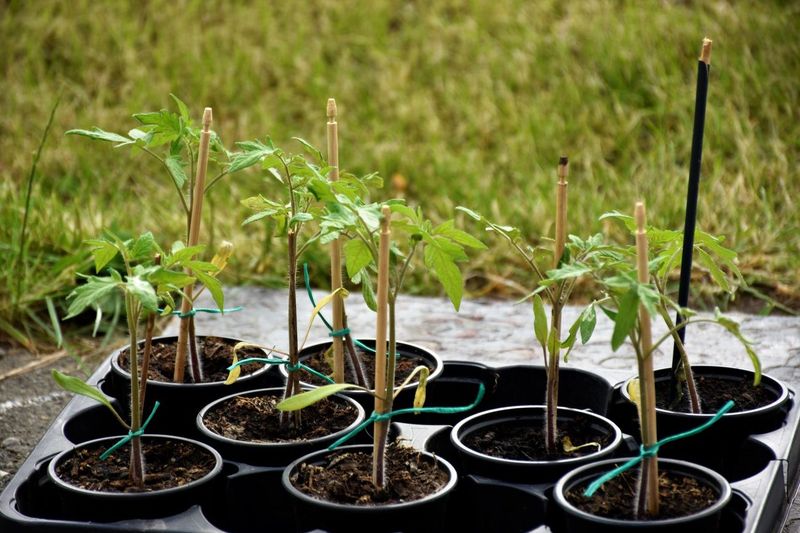
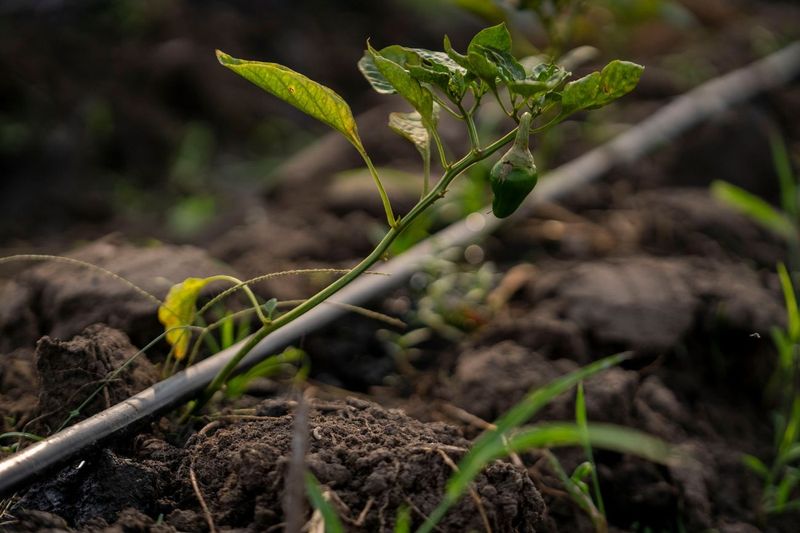
- Check the seed box before the catalog. Tomato seed keeps for years, and this September I saved my own from Cherokee Purple, San Marzano, Amish Paste and the ají dulce. A lot of what I'm tempted to mark is already sitting in an envelope.
The sticky tabs have a system, more or less. Green means "we grow this and it works," yellow means "maybe, if there's room," and pink means "I want this for no good reason." Pink tabs are allowed. They just have to survive a second read a week later, and most of them don't.
One more rule lives in the margin of my notebook: no more than three gambles a year. A gamble is anything new to us that takes up real space. I can always find three things worth trying. The trouble starts at seven.
Reading the catalogs themselves
Each catalog has its own personality. Hudson Valley Seed Company's is the one I read first, partly because they're in Accord, a little over an hour from here, and partly because their art packs are designed by working artists. As an art teacher I am not immune to a beautiful seed packet. The downside is that more than once I've bought a packet for its painting.
Johnny's got the rest of last year's order, and theirs is the catalog I trust for details: days to maturity, disease resistance, seeds per gram. Their packets also tend to hold more seed than a garden our size can use. This year I'm reading Fedco's for the first time. It's a cooperative in Maine, and the catalog is printed on newsprint, crowded with small drawings and long, opinionated descriptions. Reading it feels like getting a letter from somebody's eccentric uncle, and the small packets cost less. I haven't decided anything yet.
When I'm done with a catalog, it goes in the box by the back door, and in January it goes to school. Second graders cut tomatoes and sunflowers out of the pages for a collage lesson, and honestly it's the best use of the photos. Nobody in that room is going to order a melon they can't grow.
Right now the Hudson Valley catalog has eleven green tabs, four yellow and six pink. Pim is asleep on the Johnny's catalog, which I'm choosing to read as a sign of restraint.