The freezer door no longer closes on the first try. Behind it, stacked on their sides like library books, are twelve quarts of roasted tomato sauce, each one labeled with a date and a strip of masking tape that says things like "mostly San Marzano" or "mixed, lots of Cherokee Purple." That's twelve as of this morning, August 27, and the paste tomatoes in the east bed aren't finished with us.
This is the only tomato sauce I make anymore. No peeling, no seeding, no standing over a pot for an afternoon in August. The oven does nearly all of it.
How a batch goes
There isn't really a recipe, but this is what a normal batch looks like in our kitchen.
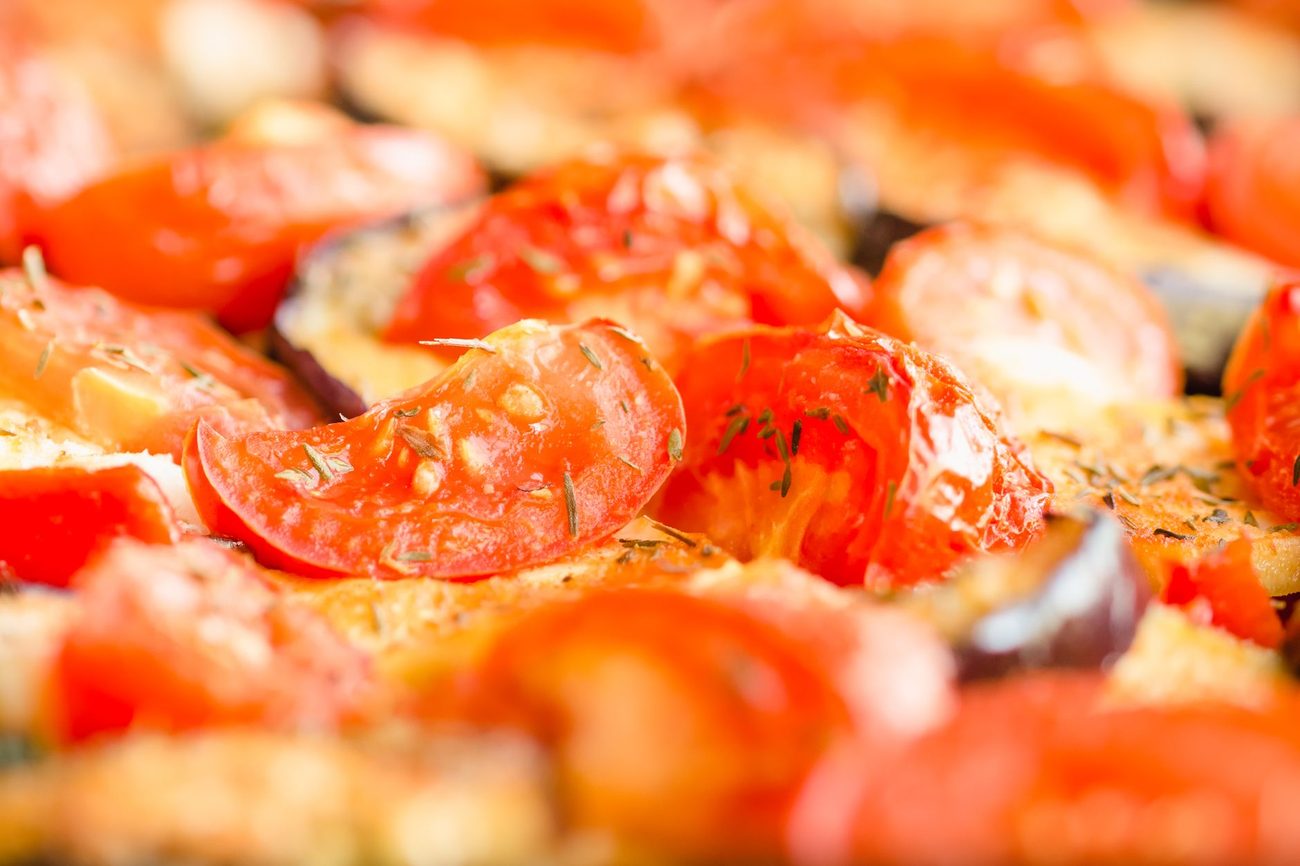
I halve paste tomatoes the long way and pack them cut side up on two rimmed sheet pans, tight enough that they hold each other up. Slicers and split Cherokee Purples go in too, cut into thick wedges. Then I tuck in a whole head's worth of peeled garlic cloves, one of our red onions from the west bed cut into chunks, a generous drizzle of olive oil and a big pinch of salt. Some batches get a few sprigs of thyme from the porch bench.
The pans go into a 325-degree oven for about two and a half hours, rotated once. I'm waiting for the edges to blister and darken and the juice in the pan to go thick and jammy. When they come out, the pans look like an old Dutch still life, deep red going almost black at the edges where the sugars caught, and the whole downstairs smells like a pizzeria.
Once the pans cool a little, everything (skins included) goes into my biggest bowl, and I blend it smooth with an immersion blender. I tear in a handful of basil at the end. Two full pans make a little over a quart, so a day with two rounds in the oven gives me about three quarts. I've had four of those days since we got home from Cape Cod on the 16th, which is a perk of being a teacher in August that I don't take for granted.
Where the tomatoes come from
Mostly from the east bed: two San Marzanos and two Amish Paste, which are the workhorses, plus whatever the Early Girl and our remaining Cherokee Purple give us that's too split or blemished to slice. The cherry tomatoes from the porch buckets almost never make it into sauce. They get eaten standing up, usually by Mateo.
In the interest of honesty, two of those four days were stretched with a box of seconds from the Pleasantville Farmers Market, the bruised and oddly shaped paste tomatoes a farm sells cheap for exactly this purpose. I wrote them down as groceries, not harvest, so they don't sneak into the pound count I keep for the garden. Every tomato from our own yard goes on the kitchen scale before it goes on a pan.
Why the freezer and not jars
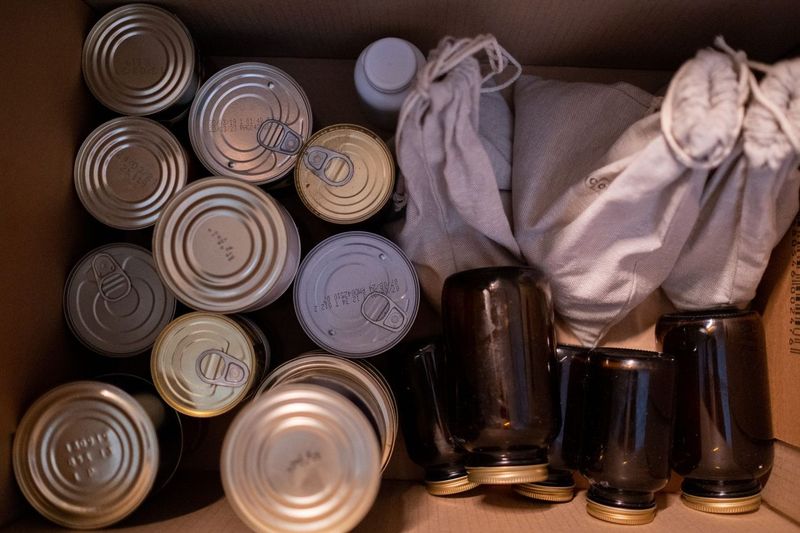
I love the look of canned tomatoes lined up on a shelf. But canning tomatoes safely means following a tested recipe exactly, including added acid, because tomatoes sit right on the edge for acidity. My roasted sauce has onions, garlic and oil in it and changes from batch to batch, which is fine in a freezer and not something I would ever put in a water bath. If I can sauce someday, I'll follow a tested recipe from the Ball book to the letter. For now, the freezer asks nothing of me except space.
Space is the real limit. I freeze the sauce in quart deli containers with an inch of room at the top for expansion, plus a few zip bags frozen flat on a sheet pan and then filed upright like folders. Nate has been asked to stop buying the big tubs of ice cream until October. He took it about as well as you'd expect.
What it becomes
In the middle of winter a quart of this turns into pizza sauce on a Friday night, a pan of shakshuka on a snow day, or a few spoonfuls stirred into my mom's habichuelas when she comes up from Yonkers. She claims it's too sweet for that. She also asks for a quart to take home every time.
It tastes like the porch in late August, warm and a little smoky, which is the whole point of putting it away. There's another full sheet pan in the oven as I write this.