There are six paper plates on top of our refrigerator right now, and each one has a name on it in black marker: Cherokee Purple, San Marzano, Amish Paste, Matt's Wild Cherry, Black Cherry and ají dulce. The top of the fridge is the one surface in the kitchen that Pim hasn't conquered, so that's where seeds go to dry.
Saving seed is the cheapest thing I do in the garden. It costs a few jars, a few paper plates and some patience, and in a good year it means a handful of varieties I won't have to buy again.
Which seeds are worth saving
Only open-pollinated varieties come back true from saved seed. Hybrids, like our Sungold, Juliet and Early Girl tomatoes and the 'Carmen' sweet peppers, are crosses between two parent lines, so their seed grows into something unpredictable. It might be perfectly nice, but it won't be a Sungold. Those I buy fresh.
That leaves five tomatoes and one pepper this year. For each, I pick from the healthiest plant, choosing fruit that's fully ripe and unblemished, and I take seed from two or three fruits so I'm not saving from a single tomato.
Tomatoes: a few days in a jar
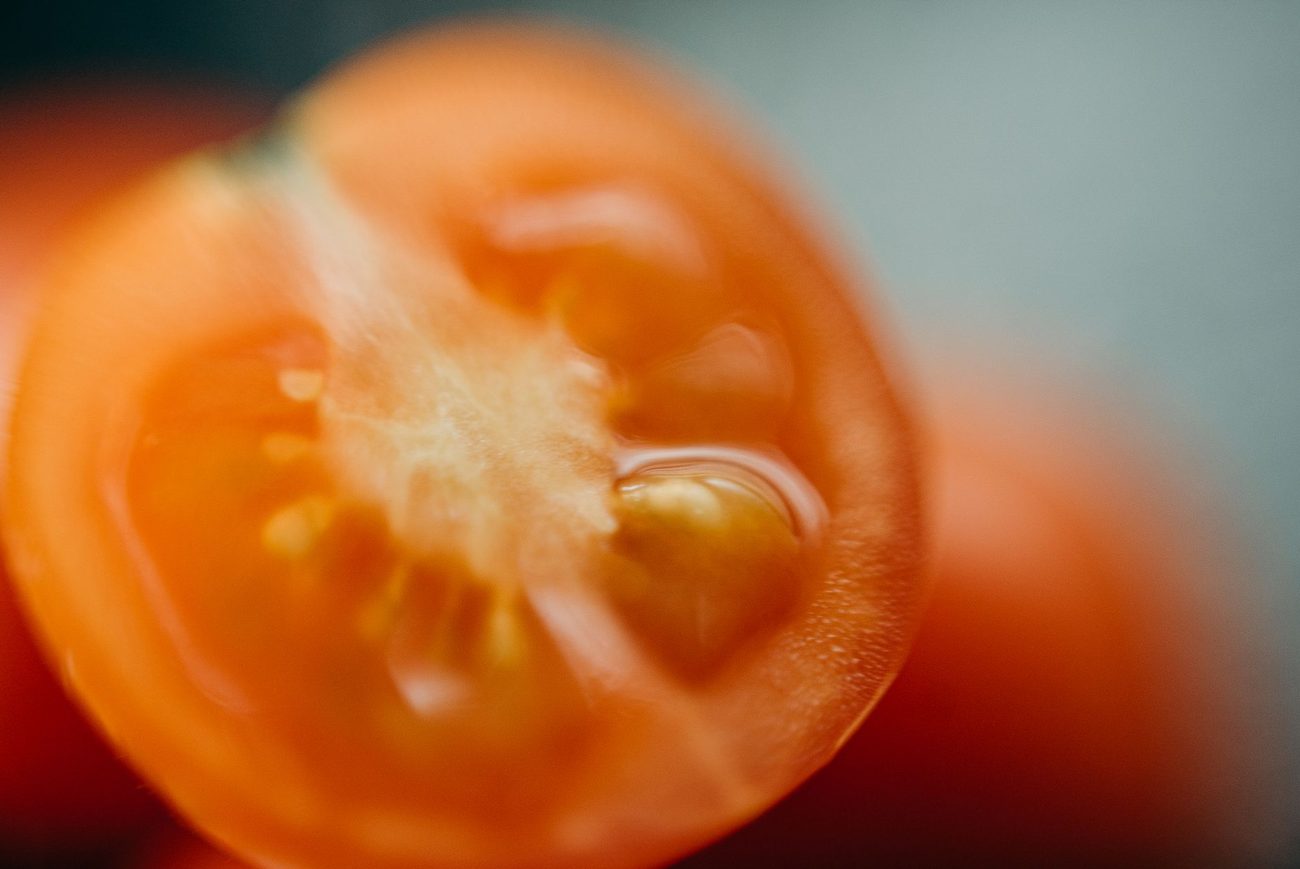
Tomato seeds sit inside a gel coating that keeps them from sprouting inside the fruit. Fermenting breaks that coating down. Here's my routine:
- Cut the tomato across the middle and squeeze the seeds and gel into a small jar. The rest of the tomato goes into sauce.
- Add a splash of water, label the jar with masking tape, and set it on the counter out of direct sun.
- Stir once a day. In two or three days a gray-white film of mold forms on top and the jar starts to smell. That's normal, and it's the point.
- Pour off the film and any floating seeds. The good seeds sink. Rinse them in a fine strainer until the water runs clear.
- Tap them onto a labeled paper plate in a thin layer and let them dry for a week or more, stirring with a fingertip every day or two so they don't clump.
The smell is the only real downside. Five jars of fermenting tomato seeds on the counter in a warm September kitchen is a lot, and Nate has asked whether they could ferment somewhere else, like the basement, or Connecticut.
I use paper plates instead of paper towels because I learned the hard way. The first year I saved seed, I dried it on paper towels, and the seeds glued themselves on so firmly that I ended up planting little squares of towel the next spring. Dry seeds pop right off a coated plate with a thumbnail.
Peppers: easier, but they cross
Pepper seeds don't need fermenting. I let the ají dulce turn fully red on the plant, cut them open and scrape the seeds straight onto a plate. They dry in a week or two. Ají dulce smell like a habanero and taste like a sweet pepper, so I don't need gloves for them, which is not true of the jalapeños growing beside them.
That's the catch. Peppers cross, and bees visit every flower in the west bed. My ají dulce grew a few feet from jalapeños and shishitos this summer. Some gardeners tie a little mesh bag over a few blossoms before they open and save seed only from those fruits. I didn't do that this year, so there's a chance a few of next summer's ají dulce come with a surprise kick.
Our ají dulce came from my mom's plants in Yonkers, and before that from the peppers Abuela Ana grew in coffee cans on a Bronx fire escape. I'm fairly sure Abuela never bagged a blossom in her life. If my seed goes strange, my mom still has her plants, and fresh seed is one phone call away.
Keeping them straight
Labels are the whole system. Every jar gets masking tape with the variety and the date, and that tape moves to the plate when the seeds do. Mateo writes the labels, since his handwriting is neater than mine after a day of writing names on 25 art portfolios. Once the seeds are dry, they go into small paper envelopes marked with the variety, the year and where the plant grew (east bed or porch bucket), and the envelopes go into a canning jar in a dark closet.
The seeds on the plates are a pale, fuzzy beige, nothing to look at, and every one of them is a tomato plant if I do my part in March.
Into the notebook goes a line for each variety, so in February I'll know exactly what's in that jar without opening it.