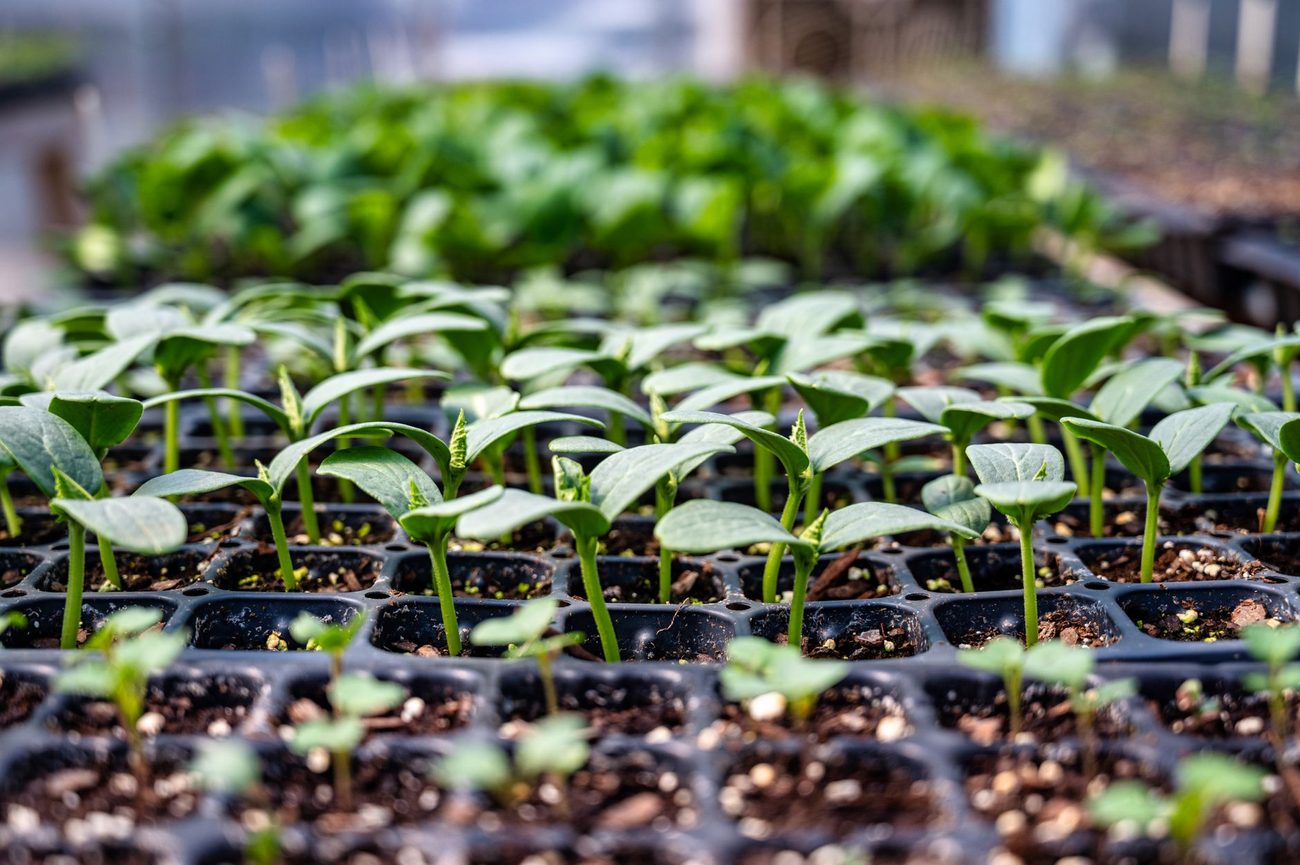
Count back ten weeks from May 17 and you land on today. That's the whole reason the basement smelled like damp seed starter at eight o'clock this morning while everyone else in the house was still asleep.
My planting-out date comes from a rule of thumb I've leaned on since our first garden: Mother's Day is my frost date. Our average last frost falls somewhere around the second week of May, so I treat Mother's Day, May 11 this year, as the earliest reasonably safe day and plant the tender crops the weekend after. That makes May 17 the target, and every seed I start in March gets counted backward from it.
Why peppers go first
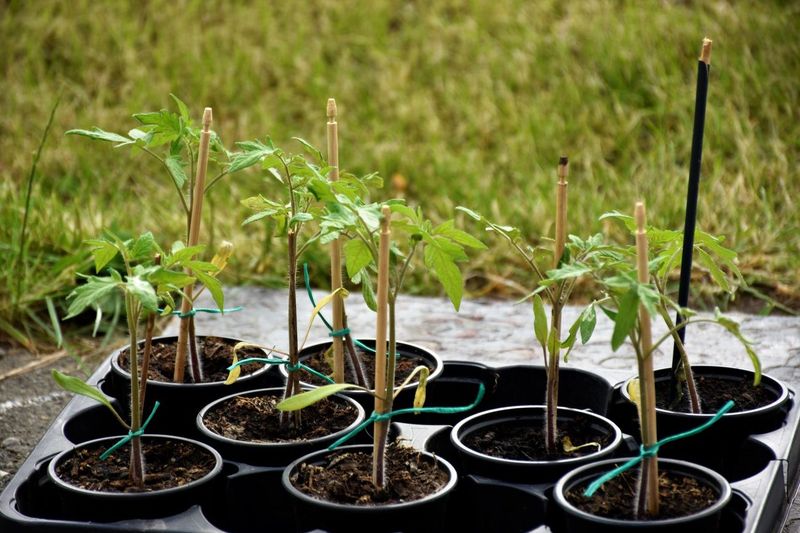
Peppers are slow at everything. They're slow to germinate, slow to put on their first true leaves and slow to bulk up, and they sulk in cold soil. Ten weeks under lights gives them time to become sturdy little plants with a few sets of leaves by mid-May. Tomatoes are the opposite. They sprout in days and grow like they're late for something, and if I start them too early they turn into leggy monsters bumping the lights by late April. Eight weeks is plenty, so the tomatoes get sown on March 23.
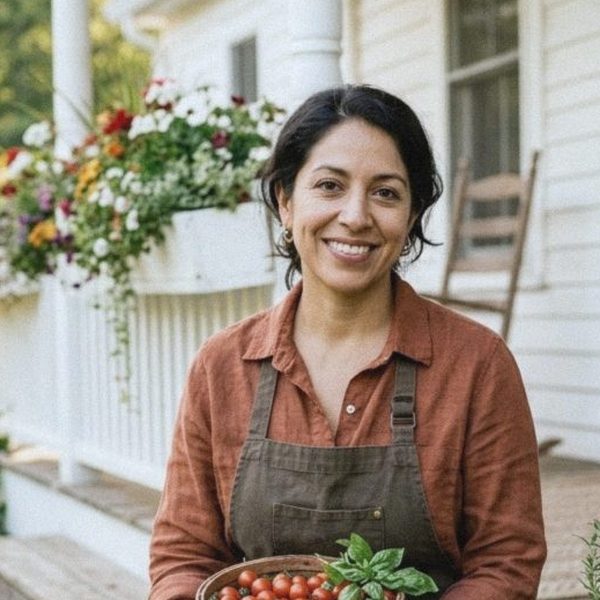
I learned the order the hard way. One spring I got excited and sowed everything in late February. The tomatoes were flopping out of their cups by April, and the peppers sown the same day were still barely past their seed leaves. Now the tomato packets ride around in my apron pocket for two weeks while I look at them and don't open them.
Four peppers, 24 cells
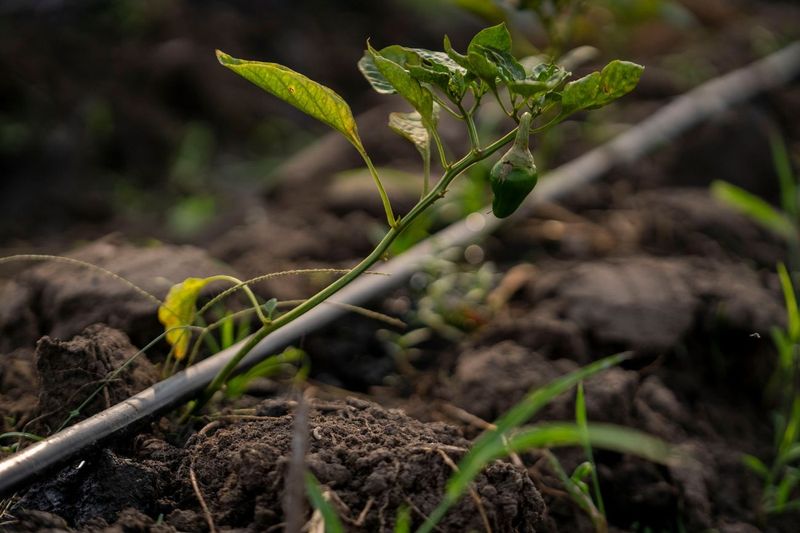
This year's peppers are ají dulce, jalapeño, shishito and 'Carmen,' a long, pointed sweet pepper that turns red earlier than a bell pepper does. I sowed six cells of each, two seeds per cell, in a 24-cell tray of Espoma Seed Starter. I'll thin to one seedling per cell with scissors so I don't disturb the roots of the keeper. The west bed has room for nine pepper plants, and the extras will go to my parents in Yonkers and to anyone at school who asks.
The ají dulce is the one that matters most to me. The seed comes from my mom's plants, which trace back to seed her mother saved. My Abuela Ana grew ají dulce in coffee cans on a fire escape in the Bronx, and her sofrito was the smell of every Sunday I remember. The peppers look like small wrinkled habaneros, but they're sweet and perfumed, with only a whisper of heat. I've never seen them at Stop & Shop, which is reason enough to give them a shelf. The seeds this morning were pale and flat, the color of old piano keys, and I handled them as if they were.
The heat mat problem
Here's the tradeoff I'm living with this year. Peppers germinate best with the soil somewhere in the 80s. My heat mat cost $21.99 back in 2023 and has no thermostat, so it simply warms the tray some amount above the basement air. With the basement around 57 degrees, the soil sits in the low 70s. The onion flats were perfectly happy at that temperature, and they've now moved off the mat to make room.
The peppers will come up at 72 degrees, just not quickly and probably not all at once. I've draped a folded bath towel over the dome at night to hold in a little more warmth, and I've written today's date on the tray so I don't start doubting myself on day eight. A thermostat for the mat is on my maybe list. This year the budget says patience instead.
Between now and May
The lights stay on 16 hours a day. Once the peppers are up, the dome comes off and the lights drop to a couple of inches above the leaves. In early May they'll start hardening off on the porch with everything else, and on the weekend after Mother's Day the nine strongest go into the west bed. The tomatoes join them on the shelf in two weeks, and that's when the shelf starts to feel crowded with only two lights.
I tucked the tomato packets back into the apron pocket and switched off the bare bulb at the bottom of the stairs on my way up. Fifteen days to go.