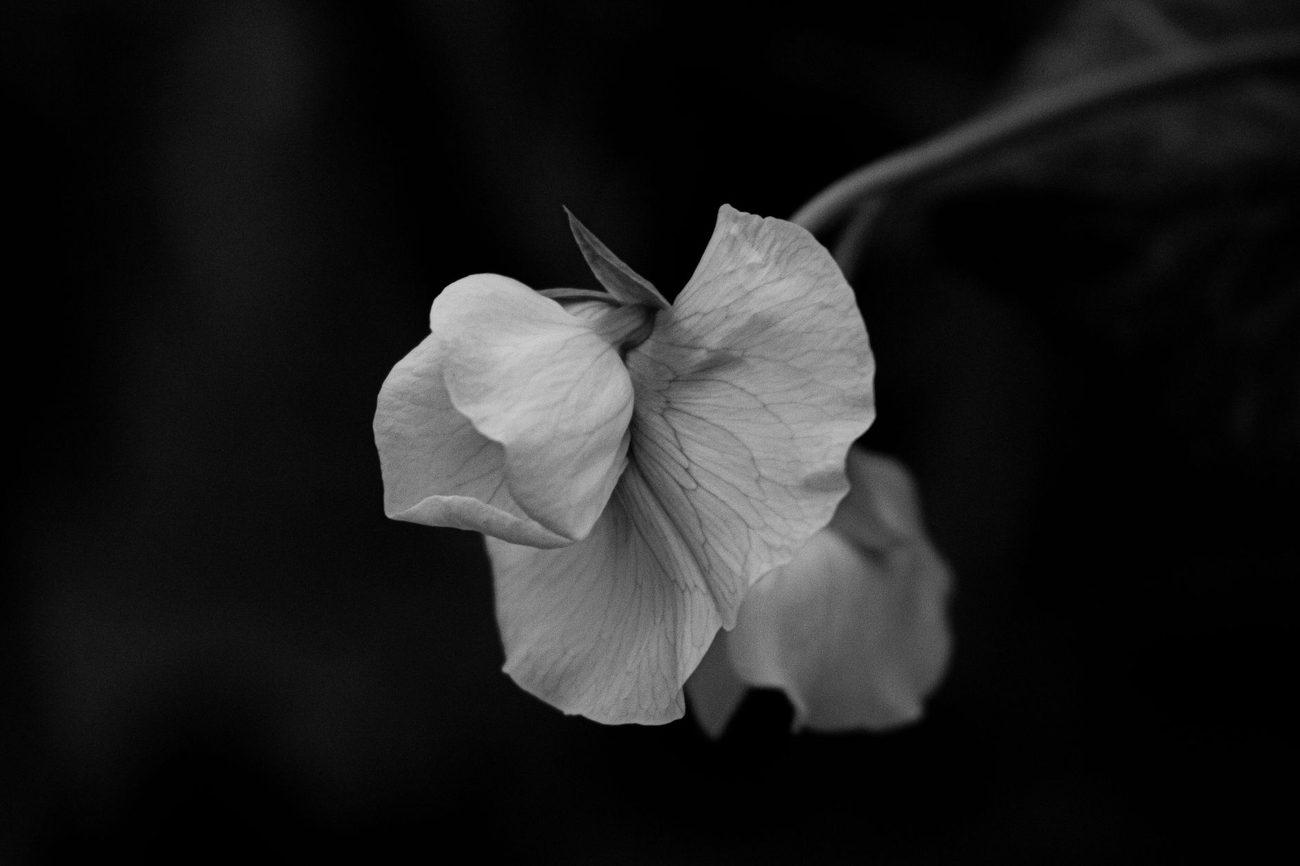
At seven this morning the thermometer on the back steps read 34 degrees. By ten it was 47 and bright, and I was on my knees in the mud along the chain-link fence in two sweatshirts and my canvas apron, the pockets stuffed with jute twine and plant labels, putting sweet peas into the ground on the first full weekend of spring. Sweet peas don't care. They handle frost better than I do.
Why they start in February
Sweet peas want cool roots and cool nights, and they give up when summer turns humid. Here that happens sometime in July, when afternoons sit between 85 and 92 degrees and the whole backyard goes limp by four o'clock. So the game is getting them to bloom in late May and June, before the heat shows up. Working backward from that, I sowed them on February 7, which gave them six weeks under the basement lights before today.
I started them in toilet-paper tubes packed upright in two old dish tubs, because sweet peas grow long roots quickly and hate having them disturbed. The night before sowing I nicked each seed coat with a nail file (the same one I use to clean up chipped clay pieces in my classroom) and let them soak in a cup of water on the kitchen counter. They came up in about ten days on the coolest tier of the shelf, well away from the heat mat, which belonged to the peppers by March 1 anyway.
When each seedling had four sets of leaves, I pinched off the growing tip. It feels wrong every time, like tearing the corner off a good drawing, but a pinched sweet pea sends up two or three side shoots instead of one, and more shoots means more stems to cut in June.
Hardening off, and one cold night I didn't plan
The tubs spent the past week on the back steps, outside in the daytime and back in at night. Then on Monday I forgot them. It dropped to 26 degrees, and at 6:15 the next morning I found them with stiff, bronzed leaves and a skin of ice on the water in the dish tub. I carried them in feeling terrible, and by lunchtime they looked exactly as they had the day before. I wouldn't do it on purpose, but it settled any worry I had about this morning's 34 degrees. A hardened-off sweet pea seems to shrug at a light frost. A soft seedling straight off the shelf would not have.
Eight feet of chain-link
Our chain-link fence runs about 36 feet along the north side of the backyard, the one we share with Sal and Joanne Ferraro. For years the snap peas have had most of it. This year the sweet peas get their own 8-foot section at the end closest to the house, where I can see it from the kitchen window, and the new 2-by-8 cut-flower strip runs along its base. The sweet peas take the back edge of that strip, right against the wire. The zinnias, cosmos and snapdragons I sketched out in January will fill in the front of it in May.
Chain-link is very nearly a perfect trellis. The only trouble is that the diamonds are a little wide for baby tendrils, so I wove two runs of jute twine through the bottom two feet, about 8 inches apart, to give them something thin to grab. Once they reach the wire itself they climb without help.
The planting took less than an hour:
- Loosened the strip with a garden fork and worked in two shovelfuls of compost. No fertilizer, since soil samples from the raised beds are still at the lab and I'd rather see numbers before I add anything anywhere.
- Slid each seedling out with its tube, cardboard and all, and tore the bottom open so the roots could get out.
- Set them about five inches apart, 18 plants in 8 feet, a little deeper than they sat in the tubes.
- Watered them in with the galvanized can and tucked a thin layer of shredded leaves around the stems.
The leaves are a particular blue-green that looks almost chalky against the gray wire, and in the low March light they practically glowed. I stood back and drew the strip into the notebook in colored pencil before my fingers stopped working.
Not the peas we eat
Around eleven Sal leaned over the fence and asked if these were "the peas for eating." They are not. Sweet pea seeds and pods are toxic, which is the whole reason they live at the opposite end of the fence from the snap peas, with a stretch of bare wire in between so nobody's hands get confused. Mateo, who is ten and on pea-picking duty every June, got the same speech at lunch. He rolled his eyes and asked whether he could still eat the snap peas right off the vine. Yes. That is the entire point of the snap peas.
Those go in next Saturday, March 28, if the soil warms up a few more degrees. For now the fence has one short row of sweet peas, a strip of fresh brown mulch, and Sal's coffee mug balanced on top of a fence post, where he forgot it.