The soil thermometer in the east bed read 61 degrees at 8 o'clock this morning. The lilacs down the street are at their peak, the nights have stayed in the 50s all week, and sixteen tomato seedlings (twelve keepers and four spares) have been living on the porch full time since Monday. Mother's Day was last Sunday, and Mother's Day is my frost date, a rule of thumb that has worked for five springs running. A week past it felt safe enough.
What made the cut
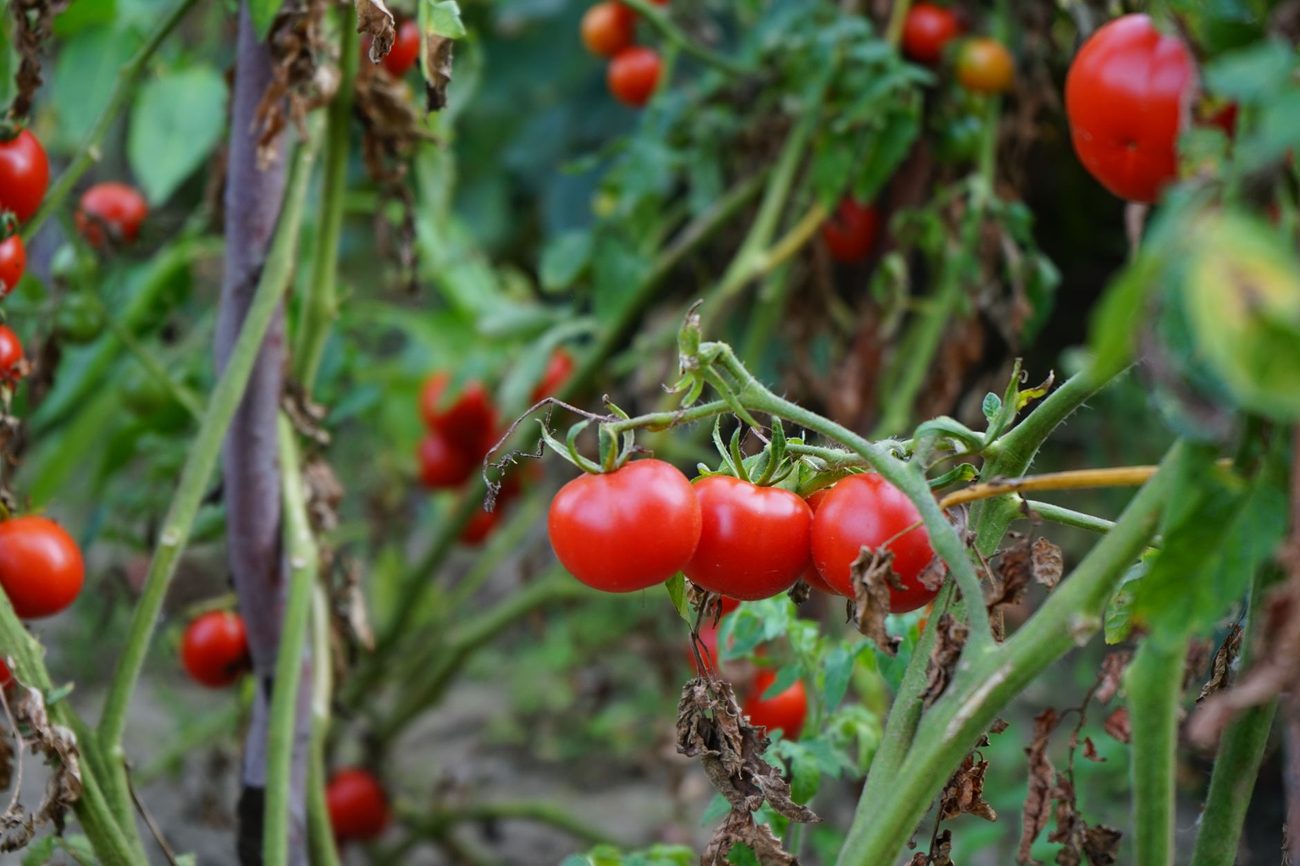
I started 40 tomato seedlings in March and kept twelve. Choosing is the hardest part of the whole year. Eight went into the east bed: two each of Cherokee Purple, San Marzano and Amish Paste, plus one Early Girl and one Sungold. Four went into buckets on the porch: another Sungold, Juliet, Matt's Wild Cherry and Black Cherry. The four spares stay in their cups on the porch for a week or two as insurance, in case anything in the bed fails to settle in.
The Cherokee Purples are for slicing, the San Marzanos and Amish Paste are for sauce, and Early Girl is there because she ripens first and I get impatient in July. Sungold gets two spots because Mateo eats them straight off the vine and would riot without them.
Eight in a bed built for six
The bed is 4 by 8 feet, 32 square feet of soil. Six tomato plants would fit it properly: two rows of three, with real air moving between them. I planted eight, two rows of four, roughly two feet apart. Every year I know better and every year I do it anyway, because each seedling has a name on a popsicle stick and I can't compost a San Marzano I've been watering since March.
The cost of crowding comes later. Less air means more leaf spot by August, and the middle of the bed turns into a jungle I have to reach into sideways. I'm going in with my eyes open. The two Cherokee Purples, which sprawl the most, went into the two heavy square cages we've had since the beds were built, at the end of the bed nearest the back fence. The other six will get tall stakes and twine once they're knee-high.
Planting deep
Tomatoes can grow roots anywhere along a buried stem, so I plant them much deeper than they sat in their cups. I snip off the lower leaves, dig a hole about ten inches deep and bury the stem until only the top few sets of leaves show. The leggiest ones get a trench instead: I lay the stem on its side and gently bend the tip upward, and within a couple of days it straightens itself out.
Each hole gets a trowel of compost and a scoop of Espoma Tomato-tone, measured per the directions on the bag. Then I water slowly with the galvanized can, two full cans for the bed, and mulch with the shredded leaves we saved from last fall. Mateo, who turned ten last week, dug half the holes and wrote the variety names on fresh sticks in very serious capital letters. The bed looked almost bare when we finished, eight small plants in a sea of brown leaves, which is exactly how a crowded bed fools you in May.
Why four live in buckets
The porch is the sunniest spot we have, and cherry tomatoes are the most forgiving plants I grow in containers. Each 5-gallon bucket has drainage holes Nate drilled in the bottom, Pro-Mix with a few handfuls of compost, a scoop of Tomato-tone and a tall stake tied to the porch railing. They line up along the sunny western end of the porch, where they get light from late morning to sunset, and one marigold is tucked in beside each bucket for color.
Buckets are extra tomatoes without extra bed space. Twelve plants in a yard this size only works because a third of them live on the porch. The tradeoff is water. By July those buckets will need a full can every evening, sometimes twice, and I'll be hauling the galvanized can back and forth like it's a second job.
The peppers went into the west bed this afternoon too: nine plants of ají dulce, jalapeño, shishito and 'Carmen' across the near end, beside the lettuce still under its row cover. The ají dulce leaves are a soft, pale green, nearly the color of celery hearts, and they look tiny and a little offended, which is normal for the first week. The two spare peppers are staying in their cups by the screen door for now, just in case.
Next year: six in the bed. I'm writing it here so I can be embarrassed in public if I don't.